Professional manufacturer of full set heavy-duty commercial gym equipment over 23 years.  +86 13642520076
 ky004@ky868.com
Language
Professional manufacturer of full set heavy-duty commercial gym equipment over 23 years. +86 13642520076 ky004@ky868.com
For any investor planning to build or upgrade a gym, price is a key factor in purchasing decisions.Whether for commercial gyms, hotel fitness centers, corporate gyms, or private clubs, many purchasers prioritize price quotes when buying fitness equipment, seeking the supplier that offers the best value for money.However, truly professional gym operators know that the lowest price does not mean the lowest cost.Commercial fitness equipment must withstand high-frequency, high-intensity usage on a daily basis. A single treadmill might run for hours each day, while a piece of strength training equipment could be used repeatedly by dozens or even hundreds of members. If the equipment lacks quality, any initial savings on procurement costs are likely to be quickly consumed by expenses for repairs, replacement parts, and losses due to equipment downtime.High-quality commercial gym equipment means not only a longer service life but also a more stable training experience, lower maintenance costs, and a higher return on investment.
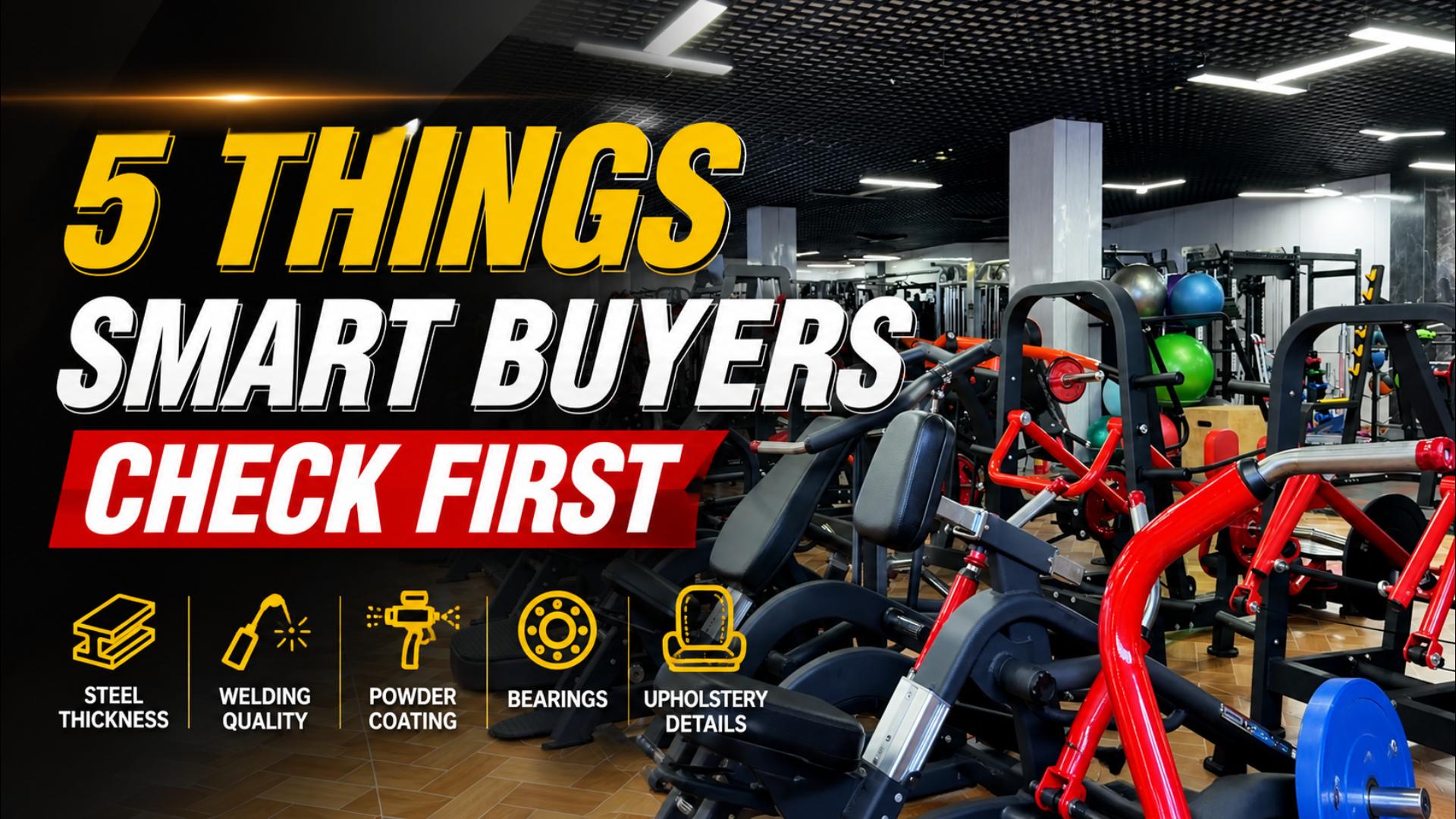
Therefore, when selecting a gym equipment manufacturer, buyers should not focus solely on price; instead, they should pay closer attention to the manufacturing craftsmanship behind the equipment—including steel thickness, welding quality, coating processes, bearing systems, and the details of the upholstery.For 23 years, China's Panata has specialized in the manufacture of commercial fitness equipment, providing professional gear and comprehensive solutions to gyms, hotel fitness centers, and commercial fitness projects worldwide. Drawing on extensive manufacturing experience, we understand that the true value of the equipment lies not in its outward appearance, but in the quality details hidden within.
1.Steel Thickness: The Foundation Determining the Stability and Service Life of Fitness Equipment
Steel is the core structural component of commercial fitness equipment and a key factor determining the equipment's load-bearing capacity and stability.Compared to home fitness equipment, commercial gym equipment is subjected to much higher levels of usage intensity. Members of varying body weights and fitness levels repeatedly use the same machines daily; consequently, the equipment frames must be capable of withstanding weight, impact, and continuous mechanical stress over the long term. To cut production costs, some low-end fitness equipment utilizes thinner steel tubing or omits structural reinforcements. While the differences may not be immediately apparent upon installation, prolonged use often leads to issues such as wobbling, loose connections, and frame deformation—problems that not only compromise the workout experience but also pose safety risks.
Professional commercial fitness equipment typically utilizes steel of appropriate specifications based on the specific load-bearing characteristics of each machine, while enhancing overall stability through structural design. For instance, strength training equipment must withstand significant impact loads, necessitating higher standards for frame strength and steel thickness.
For gym operators, choosing higher-quality steel is not merely a matter of increasing procurement costs; it is a way to mitigate future operational risks. Stable, durable equipment reduces the frequency of repairs and boosts member satisfaction, while also upholding the gym's long-term professional image.Therefore, when purchasing fitness equipment, do not focus solely on appearance and price; be sure to understand the specifications of the steel used by the supplier, the thickness of the tubing, and the overall structural design.
2.Welding Process: Key Details Affecting Equipment Safety and Durability
Beyond the steel itself, the welding process also determines the quality of commercial fitness equipment.During long-term use of fitness equipment, the forces generated by weights and movement are transferred to the frame connections—specifically, the weld points. If the welding quality is substandard, the equipment's lifespan may be compromised due to insufficient joint strength, even if the steel itself is of high quality.Low-quality welding often results in issues such as uneven weld seams, weak joints, and rough surface finishes. While these defects may not be immediately apparent when the equipment leaves the factory, the constant stress placed on the welded areas during daily, high-frequency use can eventually lead to cracking or structural loosening.
Professional gym equipment factories typically employ advanced welding technologies—including automated welding equipment and rigorous quality inspection processes—to ensure consistent strength at every weld point.High-quality welding not only enhances equipment safety but also ensures greater stability during long-term use. Equipment subject to heavy loads—such as squat racks, Smith machines, and leg press machines—demands particularly rigorous welding standards.
When evaluating a fitness equipment supplier, buyers should look beyond product images and focus more on manufacturing capabilities, including welding equipment, production processes, and quality control systems.Excellent manufacturers do not focus solely on whether their products will sell; instead, they consider whether the equipment will remain in good working condition years down the line.
3.Coating Quality: Protects equipment while enhancing the gym's overall image.
Many buyers believe that the coating only affects the equipment's appearance; in reality, the quality of the coating is directly linked to the equipment's service life.In a commercial gym environment, equipment is exposed to sweat, moisture, and cleaning agents on a daily basis. If the surface coating is of poor quality, the steel is susceptible to corrosion, leading to issues such as paint peeling, rusting, and surface damage.High-quality commercial fitness equipment typically utilizes an electrostatic powder coating process. Compared to standard paint, powder coating offers superior adhesion, wear resistance, and corrosion protection, allowing the equipment to maintain an excellent appearance even after years of use.
For hotel gyms, high-end private clubs, and branded fitness chains, the appearance of the equipment is a key factor influencing the customer experience. Equipment that consistently remains clean and attractive signals to members that the facility values quality.Therefore, when selecting a commercial gym equipment supplier, in addition to considering color and design, you should also look into the supplier's coating techniques, surface treatment processes, and quality standards.
4.Bearing system: Determines the smoothness of the workout and the long-term user experience.
In commercial fitness equipment, the bearing system—though concealed within the machine—directly impacts the user's daily workout experience.When using strength training equipment, users can clearly perceive the differences between machines. Some offer smooth movement and consistent resistance, making the workout feel natural, whereas lower-quality equipment is prone to issues such as sticking, unusual noises, and irregular movement paths. These differences often stem from the quality of the internal bearings, pulleys, and transmission systems.
High-quality bearings reduce friction during movement, ensuring smoother equipment operation. Whether for seated chest presses, lat pulldowns, leg extensions, or functional training exercises, a superior bearing system ensures the equipment moves along its intended path, providing users with a more comfortable and safe training experience.Commercial gym equipment is subject to heavy, repetitive use on a daily basis. If low-quality bearings are used, prolonged operation can lead to accelerated wear, increased noise, and even component failure; this not only compromises the member experience but also drives up long-term maintenance costs.
Professional gym equipment manufacturers invest heavily in the research, development, and testing of critical moving parts, enhancing overall equipment stability through high-quality bearings, precision-machined components, and sound structural design. Therefore, when purchasing fitness equipment, one should look beyond mere aesthetics and feature lists to consider the internal mechanical structure; the true quality of commercial-grade equipment often lies in these unseen details.
5.Cushion details: They affect comfort and also reflect manufacturing quality.
The seat cushion is the part of fitness equipment that comes into most direct contact with the user, yet it is a detail often overlooked by many buyers.In a commercial gym, a single piece of equipment may be used by dozens of members daily. If the seat design is flawed, it can reduce user comfort during long-term training and even compromise proper exercise form.High-quality commercial fitness equipment typically utilizes high-density foam, which offers excellent support while retaining its elasticity over the long term. Unlike standard foam, high-density material is resistant to sagging, ensuring effective support even after years of use.
Beyond the internal padding, the outer leather and stitching craftsmanship are equally important. High-quality leather must be wear-resistant, sweat-resistant, and easy to clean, given the frequent exposure to sweat and regular cleaning required in a gym environment. If the material quality is substandard, issues such as cracking or peeling can occur within a short period.In addition, ergonomic design is a key standard for high-quality seat cushions. Different training equipment requires specific angles and support mechanisms to help members maintain proper form and improve training efficiency.
For hotel gyms and high-end commercial fitness centers, members not only focus on equipment functionality but also use such details to gauge the professionalism of the entire fitness space.Therefore, the seat cushion is not merely an accessory, but a crucial component that influences both the user experience and the brand image.
How do you choose a reliable commercial gym equipment manufacturer?
Selecting a suitable fitness equipment supplier is crucial to the success of the entire fitness project.There are many fitness equipment suppliers on the market, yet companies vary significantly in terms of production capacity, quality control, project experience, and after-sales service. When selecting a supplier, investors in commercial gyms should not focus solely on product price but should instead comprehensively evaluate the company's overall capabilities.
First, it is important to consider whether the supplier owns its own manufacturing facility. Manufacturers with in-house production capabilities can better control product quality, production timelines, and customization requirements. Additionally, clients can gain insight into the actual manufacturing process by visiting the factory.
Secondly, it is important to consider whether the supplier has experience with commercial projects. A mature gym equipment supplier should be capable of providing not just individual pieces of equipment, but also comprehensive gym solutions tailored to specific floor plans, target demographics, and operational requirements.
For example:
Gym space planning;
Equipment zone layout;
Configuration of cardio and strength training areas;
Product mix recommendations;
3D design renderings;
Installation guidance and after-sales support.
Furthermore, a comprehensive quality inspection system is a key criterion for assessing a supplier's level of professionalism. Strict standards should be in place at every stage—from raw material procurement, production and processing, and surface treatment to the testing of finished products.Truly outstanding manufacturers do more than just sell equipment; they help customers reduce investment risks and enhance the long-term operational value of their projects.
Why are more and more global clients choosing China's Panata?
Over the course of 23 years of development, China Panata has consistently focused on the R&D, manufacturing, and global market service of commercial fitness equipment.We fully understand that a successful fitness equipment solution goes beyond simply filling a space with machines; it requires aligning with the client's specific needs to strike a balance between functional planning, space utilization, and long-term operational value.
As a professional commercial gym equipment manufacturer, Panatta provides global clients with:
Commercial gym equipment;
Cardio training equipment;
Strength training equipment;
Free weight equipment;
Comprehensive gym solutions;
Gym layout and design;
Product customization services.
Quality is strictly controlled at every stage, from product R&D to manufacturing. Key factors ensuring product stability include the selection of steel, welding processes, coating treatments, component inspections, and comprehensive testing of the finished unit.At the same time, we understand the varying needs of customers across different countries and regions. Therefore, Panata offers not only equipment but also comprehensive project support—assisting customers with everything from design planning and equipment selection to shipping and delivery—to ensure a more efficient procurement process.Currently, Panata products serve commercial gyms, hotels, corporate fitness centers, and professional training facilities across numerous countries and regions worldwide.
We have always believed that price determines a single purchase, while quality determines long-term value. When selecting fitness equipment, one should not focus solely on immediate budget savings, but rather on the value the equipment will generate over the coming years.
Conclusion: High-quality fitness equipment is the foundation of a gym's long-term success.
For any commercial fitness project, equipment procurement represents a long-term investment. While price is certainly important, the true value of the equipment is determined by product quality, durability, and long-term operating costs.
When purchasing commercial fitness equipment, it is recommended to focus on:
✅ Steel thickness—determines equipment stability and load-bearing capacity
✅ Welding quality—affects safety and durability
✅ Coating quality—protects the equipment and enhances its overall appearance
✅ Bearing system—determines the smoothness of movement and the user experience
✅ Cushion details—reflects comfort and manufacturing quality
As a professional fitness equipment manufacturer, the company does more than just supply products; it serves as a long-term partner in its clients' growth. With 23 years of dedication to commercial fitness equipment and a steadfast commitment to quality, Panata (China) provides professional solutions for gyms, hotel fitness centers, and commercial fitness projects worldwide.

 +86 13642520076
 G10 Workshop, Longteng Industrial Zone, Shiling Village Committee, Longtang Town, Qingcheng District, Guangzhou, Guangdong, China
 ky004@ky868.com
 +86 13642520076