Professional manufacturer of full set heavy-duty commercial gym equipment over 23 years.  +86 13642520076
 ky004@ky868.com
Language
Professional manufacturer of full set heavy-duty commercial gym equipment over 23 years. +86 13642520076 ky004@ky868.com
When you walk into a gym and pick up a dumbbell or sit down at a cable machine, you rarely think about the journey that piece of equipment took before reaching you. Behind every treadmill, squat rack, and weight plate lies a carefully engineered production process that transforms raw steel, plastic, and electronics into durable, safe, and high-performance fitness products.
Understanding the gym equipment production process matters whether you are a gym owner sourcing equipment, a distributor evaluating suppliers, or a fitness enthusiast who simply wants to know what separates premium machines from cheap imitations. In this article, we walk through the entire manufacturing journey — from raw materials to finished products — step by step, using the workflow of a professional fitness equipment manufacturer as our reference.
Step 1: Selecting and Preparing Raw Materials
The foundation of quality gym equipment is its raw materials. The vast majority of commercial-grade fitness equipment is built from steel, prized for its strength, durability, and relatively low cost. This is why the first thing any experienced fitness equipment manufacturer checks is the quality of its steel supply.
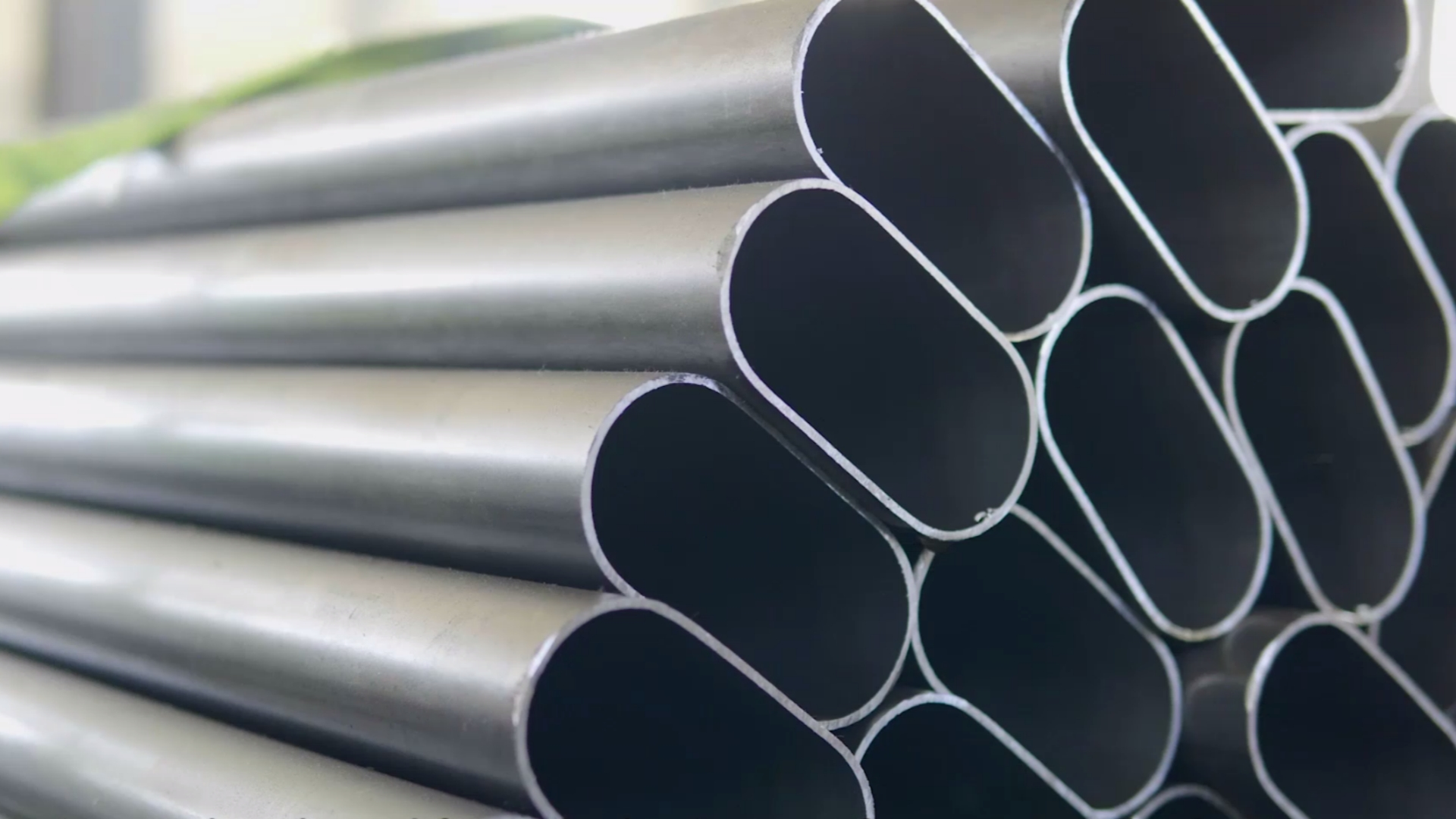
Steel tubes and pipes form the frames of machines and racks. Manufacturers typically use Q235 or Q345 carbon steel, chosen for its excellent weldability and load-bearing capacity.
Cast iron and ductile iron are the materials of choice for weight plates, dumbbells, and kettlebells, offering high density and long-term stability.
Stainless steel is used for parts exposed to sweat and moisture, such as guide rods and cables, to prevent corrosion.
High-density foam, PU leather (PVC), and rubber provide user comfort on seats, backrests, and grips, while engineering plastics house electronics on cardio machines.
Reputable factories source steel from certified mills and verify each batch with material certificates, checking composition, hardness, and thickness before it enters production. This first step may seem mundane, but it determines whether the finished product can withstand years of heavy commercial use.
Step 2: Cutting and Shaping the Steel
Once materials arrive at the fitness equipment factory, production begins with cutting. Modern manufacturers rely on laser cutting machines and CNC pipe-bending equipment rather than manual methods. Laser cutting delivers precise holes, slots, and contours with tolerances as tight as 0.1 mm, ensuring parts fit perfectly during assembly. Any serious gym equipment factory today has invested in this automated machinery, because manual cutting simply cannot guarantee consistency across large production runs.
CNC tube benders then shape straight steel tubes into the curved frames you see on leg presses, lat pulldowns, and treadmills. Precision at this stage is critical — a bend just a few degrees off can affect both the ergonomics and the structural integrity of the final machine.
Step 3: Welding the Frame
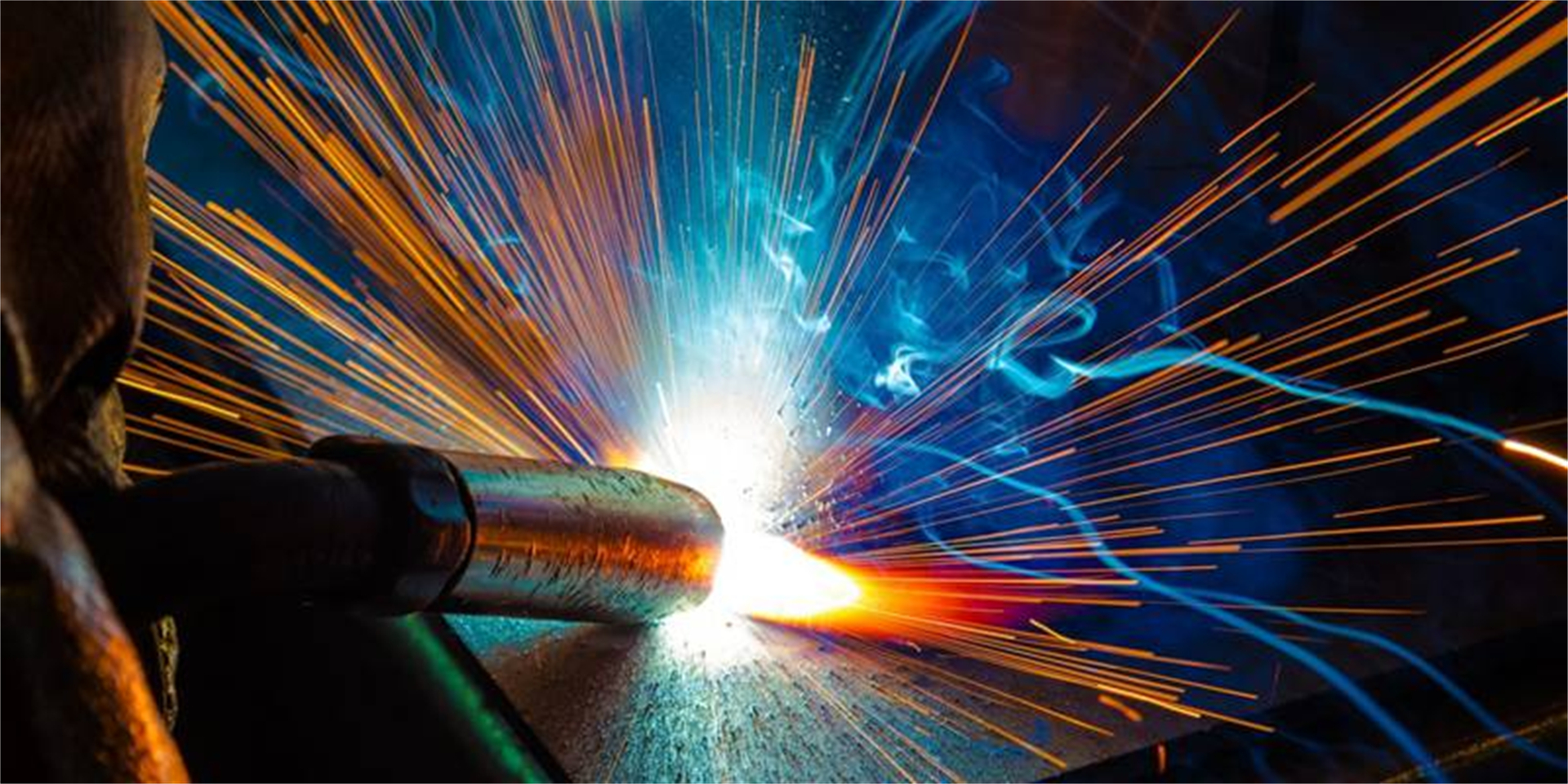
Next comes welding, where cut and bent components are joined into complete frames. Leading manufacturers use robotic welding arms for consistency: every weld seam is uniform, penetration is deep, and structural strength is repeatable across thousands of units. Robotic welding is one of the clearest signs that a fitness equipment manufacturer operates at a professional, export-ready scale.
Human welders still play a vital role for complex or low-volume parts. After welding, each frame is inspected and ground smooth to remove spatter and sharp edges, preparing the surface for coating.
Step 4: Surface Treatment and Powder Coating
Raw steel rusts quickly, so surface treatment is one of the most important stages in gym equipment manufacturing, and it is an area where a full-service fitness equipment factory can control quality in-house rather than outsourcing. The process typically includes:
Degreasing and pickling — removing oil, rust, and mill scale from the metal surface.
Phosphating — applying a chemical conversion layer that improves coating adhesion and corrosion resistance.
Electrostatic powder coating — epoxy or polyester powder is sprayed onto the frame using an electrostatic gun, then cured in an oven at around 200°C.
The result is a hard, scratch-resistant finish that withstands sweat, cleaning chemicals, and daily abuse in commercial gyms. Powder coating is also more environmentally friendly than traditional solvent-based paints, producing almost zero VOC emissions.
Step 5: Machining and Manufacturing Components
While frames are being coated, other components move down their own production lines:
Weight plates and dumbbells are cast in iron foundries, machined for accuracy, and finished with rubber, urethane, or paint.
Guide rods and cables are produced from polished stainless steel and aircraft-grade steel wire, rated far above the maximum working load.
Bearings, pulleys, and bushings are machined or sourced from certified suppliers, then tested for smooth, quiet operation.
Counterweight stacks are precisely calibrated so each plate on a selectorized machine weighs exactly what the label claims — a mark of a trustworthy manufacturer.
Step 6: Upholstery and Plastic Injection
Upholstery workshops cut high-density foam to shape, wrap it in double-stitched PVC or leather, and attach it to plywood or ABS backings. Good upholstery uses closed-cell foam that resists sweat absorption and won't flatten after months of use.
In parallel, injection molding machines produce plastic housings, covers, and shrouds for cardio consoles, keeping tolerances tight so parts snap together cleanly.
Step 7: Assembly and Electronics Integration
In the assembly workshop, coated frames meet their components. Technicians install bearings, pulleys, cables, and weight stacks, torque every bolt to specification, and mount upholstery. For treadmills, ellipticals, and exercise bikes, this stage also includes integrating motors, control boards, displays, and wiring harnesses — followed by electronic calibration to ensure speed, incline, and heart-rate readings are accurate.
Step 8: Quality Control and Safety Testing
Before anything ships, finished products pass rigorous quality control:
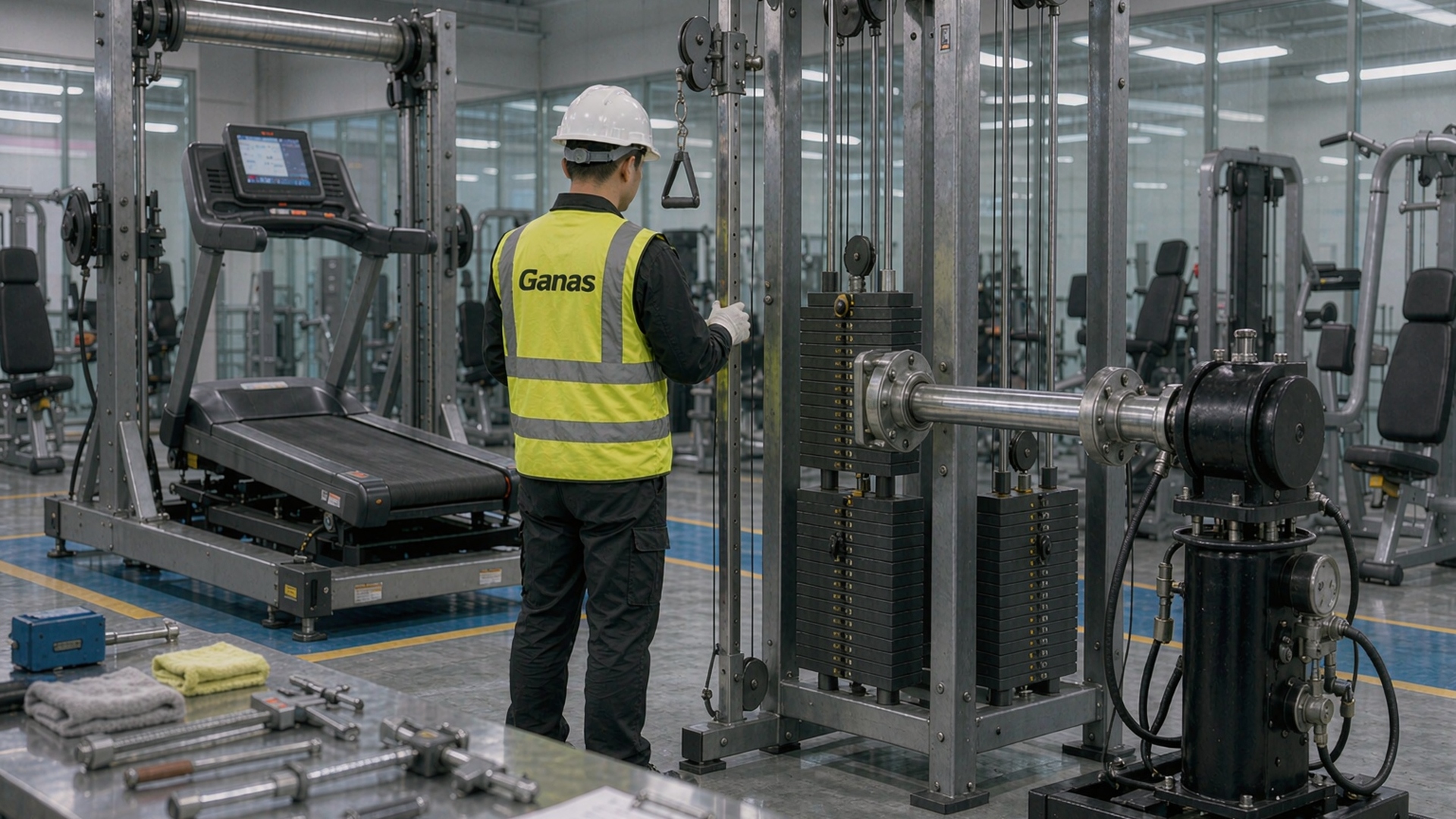
Load testing — frames and weight stacks are tested at loads well above rated capacity.
Fatigue testing — key machines undergo tens of thousands of operation cycles to simulate years of gym use.
Safety compliance — equipment is certified against international standards such as EN 957 / ISO 20957 and, for the US market, ASTM guidelines.
Functional inspection — every movement arm, cable, and console is operated and checked before packing.
Many factories also hold ISO 9001 certification, which governs the consistency of the entire production system. For buyers, this is the stage where choosing an established fitness equipment manufacturer matters most — a professional gym equipment factory tests every batch, not just display samples.
Step 9: Packaging and Shipping
Finally, machines are partially disassembled, wrapped in foam and bubble film, and packed in reinforced cartons or wooden crates. Clear assembly instructions, tools, and spare parts kits are included so equipment can be reassembled quickly at the destination gym.
Case in Point: Ganas Gym Equipment Factory
To see how these steps come together in practice, it helps to look at an established brand such as Ganas, a Chinese fitness equipment manufacturer with decades of experience in the industry. Several advantages distinguish Ganas gym equipment factory from smaller workshops:
Full in-house production — laser cutting, robotic welding, powder coating, upholstery, and final assembly are all completed within its own fitness equipment factory, giving tight control over quality and lead times.
Complete product range — from strength machines and plate-loaded equipment to treadmills, exercise bikes, and full gym setups, allowing buyers to source an entire facility from one supplier.
OEM/ODM capability — Ganas supports custom branding, custom colors, and tailored machine configurations for distributors and gym chains worldwide.
Certified quality — its products are built to meet international standards such as EN 957 / ISO 20957, with frames and welds tested under heavy commercial use.
Global export experience — with equipment shipped to markets across Asia, Europe, the Middle East, and the Americas, Ganas gym equipment factory has the logistics and after-sales support that international buyers require.
For anyone sourcing from China, a factory like Ganas demonstrates exactly why the production process described above matters: every advantage — in-house machinery, testing labs, and certifications — translates directly into safer, longer-lasting gym equipment.
Frequently Asked Questions
Q1: What steel is used in gym equipment manufacturing?
Most commercial gym frames use Q235 or Q345 carbon steel tubes for their excellent weldability and load capacity, while weight plates and dumbbells are made from cast iron or ductile iron. Stainless steel is reserved for guide rods, cables, and other corrosion-prone parts.
Q2: How can I verify a gym equipment factory before ordering?
Ask for material certificates, ISO 9001 certification, and EN 957 / ISO 20957 test reports. A professional fitness equipment manufacturer will also welcome a factory audit — either on-site or via live video — to show its welding, coating, and testing facilities.
Q3: What is the difference between OEM and ODM in fitness equipment?
OEM means the factory produces equipment under your brand based on existing designs; ODM means the factory also handles design and engineering for your custom requirements. Ganas offers both OEM and ODM services for distributors and gym chains.
Q4: How long does the gym equipment production process take?
For a standard order, production usually takes 15–35 days depending on quantity and machine types, plus extra time for powder coating curing and quality testing. Custom OEM/ODM projects may require additional lead time for tooling and samples.
Conclusion
The journey from raw steel to a finished gym machine involves cutting, welding, coating, machining, assembly, and testing — every step influencing the safety, durability, and user experience of the final product. When choosing a fitness equipment manufacturer, look beyond price: ask about their materials, welding technology, coating process, and quality certifications. As the Ganas gym equipment factory example shows, a manufacturer that controls every stage of production in-house is far more likely to deliver equipment that performs reliably for years to come.
Ready to equip your gym or start a distribution business? Contact Ganas today for a free quote on commercial fitness equipment — our team will recommend the right machines and production plan for your market.

 +86 13642520076
 G10 Workshop, Longteng Industrial Zone, Shiling Village Committee, Longtang Town, Qingcheng District, Guangzhou, Guangdong, China
 ky004@ky868.com
 +86 13642520076