Professional manufacturer of full set heavy-duty commercial gym equipment over 23 years.  +86 13642520076
 ky004@ky868.com
Language
Professional manufacturer of full set heavy-duty commercial gym equipment over 23 years. +86 13642520076 ky004@ky868.com
Commercial gym equipment is a significant investment for fitness clubs, hotels, apartment gyms, and other fitness facilities. From treadmills and selectorized strength machines to free weights and functional training systems, every piece of equipment plays an important role in delivering a safe and effective workout experience.
However, even high-quality commercial gym equipment requires proper maintenance to maintain its performance over time. Regular cleaning, timely inspections, correct lubrication, and professional servicing can help reduce unexpected breakdowns, control operating costs, and extend equipment lifespan.
Whether you operate a large commercial fitness center or manage a small hotel gym, this gym equipment maintenance guide will help you develop an effective maintenance routine and protect your investment.
1. Why Is Gym Equipment Maintenance Important?
A well-planned fitness equipment maintenance program offers several important benefits for gym owners and operators.
Extend Equipment Lifespan
Commercial fitness equipment is designed to withstand frequent use, but continuous operation gradually causes wear on moving parts, cables, bearings, belts, and upholstery. Regular maintenance helps identify early signs of wear and prevents minor issues from developing into major mechanical problems.
Improve Member Safety
Loose bolts, damaged cables, worn treadmill belts, and unstable machine components can create safety risks. Routine inspections help ensure that equipment remains secure and functions as intended.
Reduce Repair and Replacement Costs
Preventive maintenance is generally more manageable than dealing with unexpected equipment failures. Identifying problems early can reduce repair expenses, minimize downtime, and delay the need for costly replacements.
Maintain a Better User Experience
Members expect smooth movement, comfortable adjustments, and reliable performance. Properly maintained commercial gym equipment supports consistent workout quality and helps create a professional fitness environment.
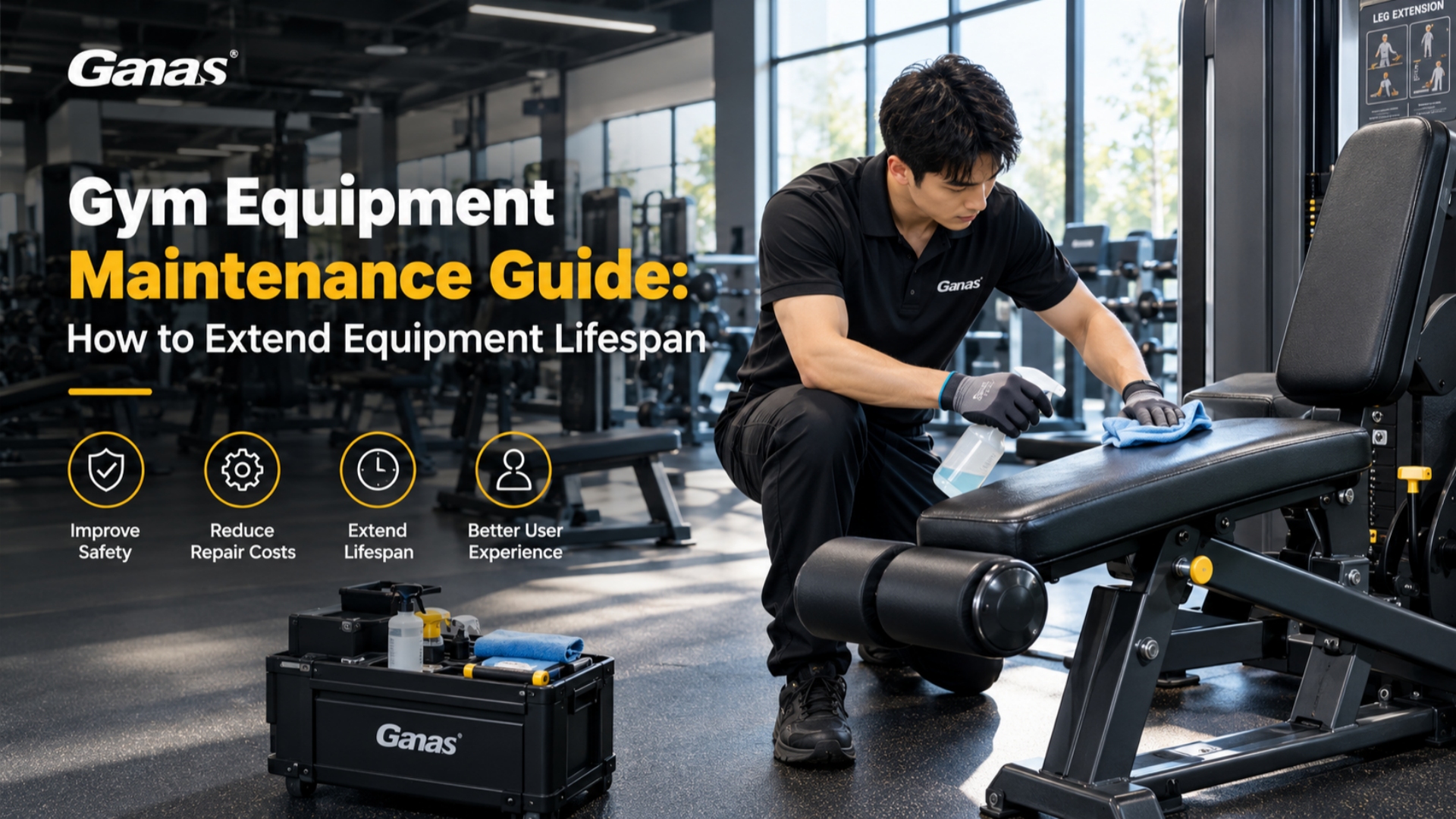
2. Clean Gym Equipment After Every Use
Cleaning is one of the simplest and most important parts of gym equipment maintenance. Sweat, dust, body oils, and moisture can gradually damage upholstery, metal surfaces, electronic components, and other equipment parts.
For commercial gyms with high daily traffic, cleaning should be included in the daily operating routine.
Recommended cleaning practices:
Wipe down seats, backrests, handles, and other frequently touched surfaces with an appropriate equipment-safe cleaner.
Use a soft cloth to remove dust and sweat from machine frames and adjustment handles.
Clean treadmill handrails and consoles carefully, avoiding excessive moisture around electrical components.
Inspect upholstery for cracks, peeling, or damaged stitching while cleaning.
Follow the manufacturer's instructions when selecting disinfectants and cleaning products.
Avoid using abrasive pads, harsh chemicals, or excessive water unless specifically approved by the manufacturer. Certain cleaning agents can damage protective coatings, rubber components, and synthetic leather upholstery.For strength machines and free weights, pay particular attention to grips, weight-stack surfaces, adjustment pins, and areas where sweat tends to accumulate.
3. Inspect Bolts, Cables, and Moving Parts Regularly
Mechanical components experience repeated stress during normal gym operations. Over time, vibration, heavy loading, and frequent adjustments may cause certain parts to loosen or wear.
Routine inspections help maintain equipment stability and operating performance.
Check Bolts and Fasteners
Inspect frame connections, seat adjustments, footplates, handles, and other structural attachment points for loose or missing fasteners. Tighten them according to the manufacturer's specifications rather than applying excessive force.
Inspect Cables and Pulleys
For selectorized strength machines and cable crossover systems, check cables for fraying, kinks, corrosion, or unusual stretching. Inspect pulleys for damage, abnormal noise, and restricted movement.Damaged cables should be replaced promptly by qualified personnel. Do not continue using a machine with a compromised load-bearing cable.
Examine Bearings and Moving Components
Listen for unusual noises and look for jerky movement, excessive play, or unexpected resistance. These symptoms may indicate worn bearings, misalignment, or insufficient lubrication.For plate-loaded machines, inspect pivot points, guide mechanisms, and weight plate storage pegs as part of the regular maintenance schedule.
4. Maintain Treadmills and Other Cardio Equipment
Cardio machines often operate for many hours each day, making preventive maintenance particularly important in commercial fitness facilities.
Treadmill Maintenance
Treadmills require regular attention to the running belt, deck, motor area, and electronic systems.
Key maintenance tasks include:
Clean the belt and surrounding area: Remove dust, dirt, and debris that may affect belt movement.
Check belt alignment: Make sure the running belt remains centered and moves smoothly.
Inspect belt tension: Follow the manufacturer's guidance to avoid excessive tension or slippage.
Lubricate when required: Some treadmill models require periodic lubrication, while others use maintenance-free or specially designed decks. Always follow the model-specific instructions.
Keep the motor compartment clean: Have qualified personnel inspect and clean the compartment according to the manufacturer's service procedures.
Check the console and safety key: Confirm that controls and safety features operate correctly.
Do not apply lubricant to a treadmill unless the manufacturer specifies the correct product and procedure.
Ellipticals, Exercise Bikes, and Other Cardio Machines
For elliptical trainers, inspect pedal connections, moving arms, drive belts, and resistance systems. For stationary bikes, check pedal tightness, seat adjustments, crank components, and resistance controls.For all cardio equipment, investigate unusual vibrations, noises, or changes in resistance instead of allowing the machine to continue operating with a suspected fault.
5. Lubricate Equipment According to Manufacturer Guidelines
Lubrication helps reduce friction between compatible moving components, supporting smoother operation and minimizing unnecessary wear.However, not every component requires lubrication, and applying the wrong product can cause damage.
For example, some strength machines require specific lubrication for guide rods, while others use sealed bearings or maintenance-free components. Treadmill lubrication requirements also vary by model.
To maintain equipment correctly:
Identify which components require lubrication.
Use only the recommended lubricant.
Follow the specified maintenance intervals.
Remove excess lubricant to prevent dust accumulation.
Record completed maintenance tasks for future reference.
Never lubricate cables, belts, brakes, or other components unless the manufacturer explicitly instructs you to do so. Incorrect lubrication can affect grip, friction, or braking performance.
6. Protect Upholstery, Handles, and Metal Surfaces
The condition of upholstery and contact surfaces directly affects both equipment appearance and user comfort.In busy commercial gyms, seats, backrests, arm pads, and handles are exposed to sweat, friction, repeated adjustments, and frequent cleaning.
To maintain these components:
Clean upholstery using approved products and soft cloths.
Avoid sharp objects that may puncture or tear seat coverings.
Inspect seams and padding for damage or deformation.
Check rubber and foam grips for looseness, cracks, or excessive wear.
Keep equipment surfaces dry to reduce the risk of corrosion.
Address damaged protective coatings before corrosion spreads, using manufacturer-approved repair procedures.
If upholstery is torn or padding is deteriorating, consider replacing the affected component rather than waiting until the damage becomes more extensive.
For gyms in humid or coastal environments, ventilation and moisture control are particularly important because prolonged exposure to moisture can accelerate corrosion on metal components.
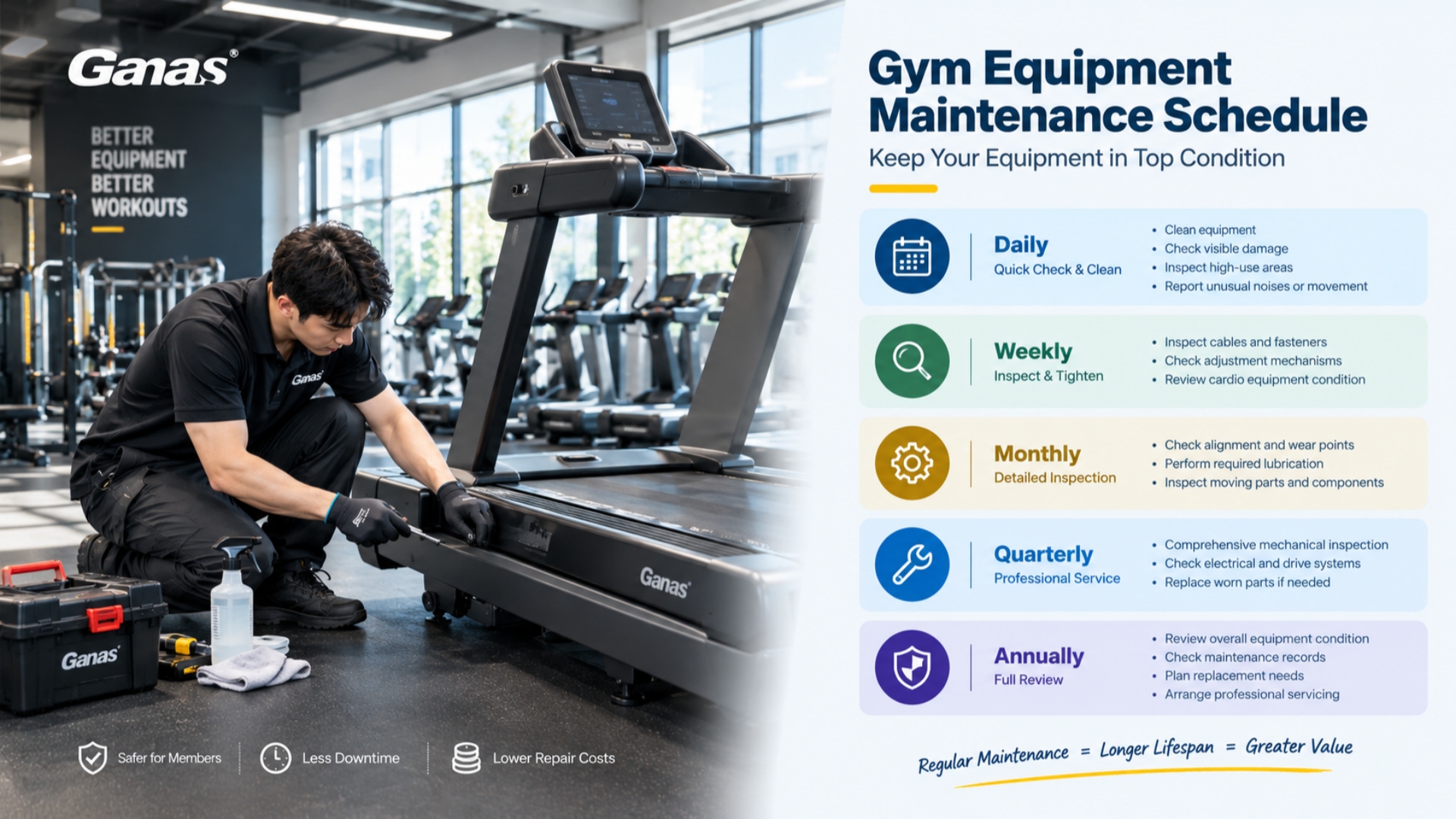
7. Establish a Practical Gym Equipment Maintenance Schedule
A consistent maintenance schedule helps gym operators manage daily tasks and prevent important inspections from being overlooked.
The following schedule is a general starting point. Actual intervals should be adjusted according to equipment manuals, usage intensity, environmental conditions, and manufacturer recommendations.
| Frequency | Recommended maintenance tasks |
| Daily | Clean equipment, check visible damage, inspect high-use areas, and report unusual noises or movement |
| Weekly | Inspect cables, fasteners, adjustment mechanisms, and cardio equipment condition |
| Monthly | Conduct more detailed mechanical inspections, check alignment, review wear points, and perform required lubrication |
| Quarterly | Arrange a more comprehensive inspection based on equipment type and usage, including electrical and drive systems where applicable |
| Annually | Review equipment condition, maintenance records, replacement needs, and professional servicing requirements |
For high-traffic commercial gyms, some inspections may need to be performed more frequently. Any safety-critical defect should be addressed immediately rather than waiting for the next scheduled maintenance session.
8. Train Staff and Keep Maintenance Records
Even the best maintenance plan will be ineffective if staff members do not understand their responsibilities.Gym operators should provide basic training on equipment cleaning, visual inspections, fault reporting, and safe shutdown procedures.Staff should know how to recognize common warning signs, including unusual noises, loose components, frayed cables, unstable frames, and malfunctioning controls.
A maintenance log should record:
Equipment name and model.
Inspection date and responsible staff member.
Issues identified during inspection.
Repairs and replacement parts.
Lubrication and servicing history.
Follow-up actions and next inspection date.
Digital spreadsheets or equipment management software can make these records easier to organize, particularly for facilities with dozens or hundreds of machines.
Accurate records also help gym owners identify recurring faults, plan maintenance budgets, and make better decisions about equipment replacement.
9. Common Gym Equipment Maintenance Mistakes to Avoid
Some maintenance mistakes can shorten equipment lifespan or create unnecessary safety risks.
Ignoring small problems: Minor noises, loose handles, or inconsistent resistance may indicate developing mechanical issues. Investigate them early.
Using the wrong cleaning products: Harsh chemicals can damage upholstery, rubber grips, coatings, and electronic surfaces.
Overlooking manufacturer instructions: Different machines have different maintenance requirements. A universal maintenance routine may not be suitable for every model.
Attempting repairs without proper training: Electrical systems, drive mechanisms, weight-bearing cables, and other safety-critical components should be serviced by qualified personnel.
Allowing damaged equipment to remain in service: If a machine presents a potential safety hazard, stop using it, clearly mark it out of service, and arrange an appropriate inspection or repair.
Avoiding these mistakes helps maintain safer workout conditions and reduces preventable equipment downtime.
10. Choose Quality Commercial Gym Equipment from the Beginning
Maintenance is essential, but equipment selection also has a significant impact on long-term operating costs.When purchasing commercial gym equipment, buyers should consider frame construction, material quality, welding, coating durability, movement design, component availability, warranty terms, and after-sales support.Equipment designed for commercial use should be appropriate for the expected training intensity and daily user volume. A machine intended for occasional home workouts may not be suitable for a busy commercial fitness center.Working with an experienced gym equipment manufacturer can also make future maintenance easier by providing access to product documentation, replacement parts, technical guidance, and equipment configuration support.
At Ganas, we focus on commercial fitness equipment and complete gym solutions for fitness clubs, hotels, apartments, and other professional fitness facilities. From strength training machines and cardio equipment to free weights and functional training systems, selecting suitable equipment is an important step toward building a reliable gym environment.For gym owners planning a new facility or upgrading an existing fitness center, it is worth considering not only the initial purchase price but also expected maintenance requirements, durability, and long-term service support.
Conclusion
Extending gym equipment lifespan requires more than occasional cleaning or repairs. It depends on consistent preventive maintenance, timely inspections, correct lubrication, proper staff training, and responsible equipment use.By establishing a practical maintenance schedule and addressing problems before they become serious, gym owners can improve equipment reliability, support member safety, reduce avoidable downtime, and protect their investment over the long term.Whether you manage a small hotel gym or a large commercial fitness club, a well-maintained equipment fleet helps create a more professional training environment.Looking for reliable commercial gym equipment for your next project? Contact Ganas to explore fitness equipment options and complete gym solutions tailored to your facility's space, training requirements, and budget.

 +86 13642520076
 G10 Workshop, Longteng Industrial Zone, Shiling Village Committee, Longtang Town, Qingcheng District, Guangzhou, Guangdong, China
 ky004@ky868.com
 +86 13642520076