Professional manufacturer of full set heavy-duty commercial gym equipment over 23 years.  +86 13642520076
 ky004@ky868.com
Language
Professional manufacturer of full set heavy-duty commercial gym equipment over 23 years. +86 13642520076 ky004@ky868.com
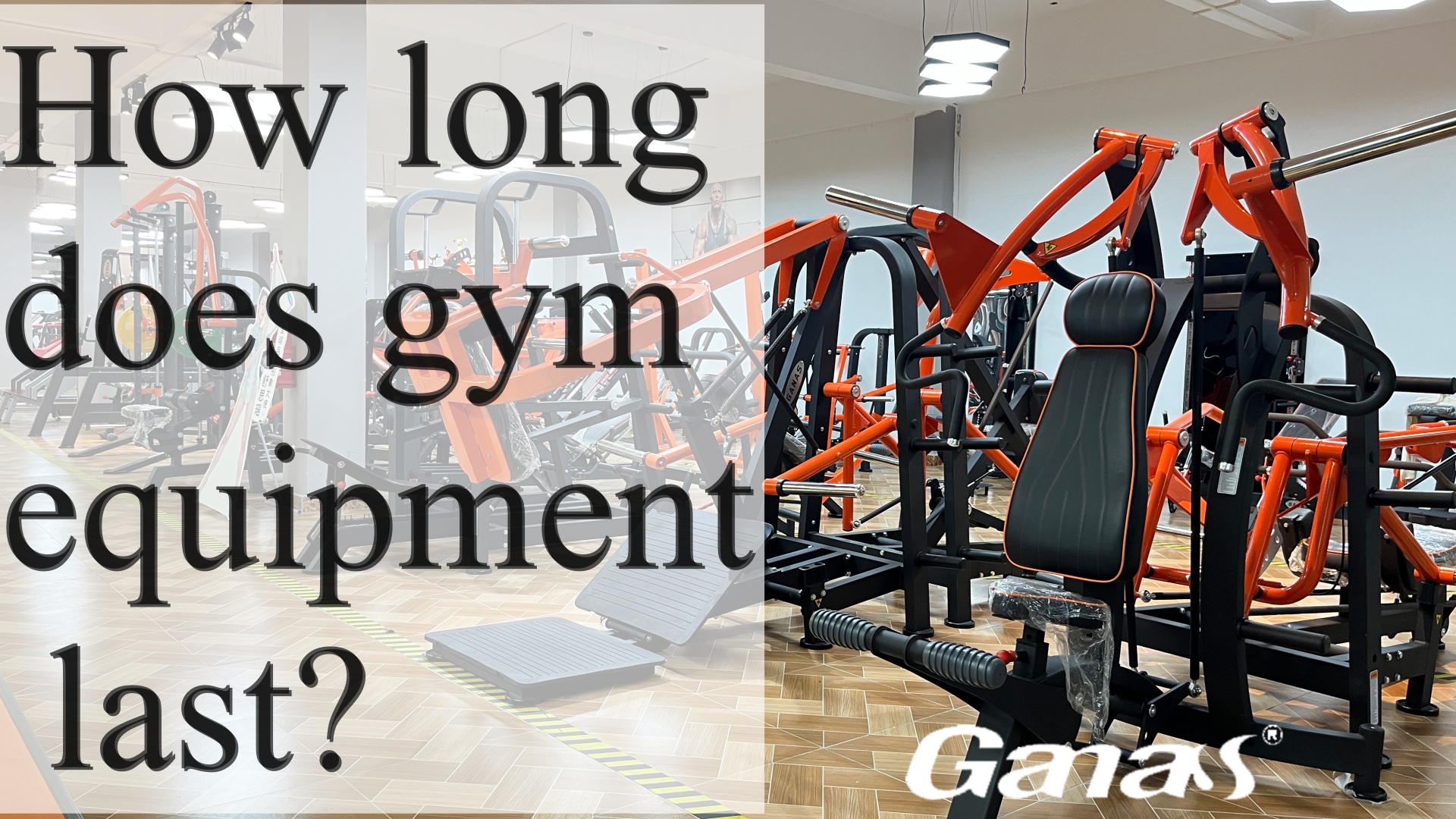
When investing in fitness equipment, many gym owners, hotel operators, and fitness enthusiasts are concerned about a core question: How long is the lifespan of the fitness equipment?This isn't just a number about time; it's a crucial metric tied to investment costs, operating returns, and customer experience. The average lifespan of most commercial fitness equipment is between 7 and 12 years, depending on frequency of use, maintenance quality, environmental conditions, and the quality of the product itself.
As a professional fitness equipment supplier with over 20 years of experience, Ganas has always emphasized that understanding the service life of fitness equipment and the factors that affect it can help companies maximize their investment and avoid losses caused by equipment damage or untimely updates.
This article will comprehensively explore:
The typical lifespans of various types of fitness equipment
The main factors affecting lifespan
How to extend lifespan through proper maintenance
An investment perspective on equipment lifecycle management
Ganas' professional advice and practical experience
1.Typical lifespans of different types of fitness equipment
Fitness equipment comes in a wide variety of types, from treadmills and aerobic equipment to strength machines and free weights. Different equipment varies significantly in structural complexity, number of vulnerable parts, and usage patterns, resulting in varying lifespans. The following is a rough guideline for the lifespan of common commercial equipment:
A.Treadmill
Average Lifespan: 7-10 Years
Treadmills are among the most frequently used pieces of equipment in gyms. The motor, running belt, and console are all highly demanding components. With proper maintenance (e.g., regular oil changes and belt tension checks), high-end commercial treadmills can easily last for over 10 years. However, if poorly maintained, they can experience frequent breakdowns after only five years.
B.Exercise Bike & Spin Bike
Average lifespan: 8-12 years
The structure is relatively simple, with the primary wear areas being the flywheel, drive belt, and resistance system. If used intensively (such as in a gym's group class area), the flywheel and resistance system may require periodic replacement, but the overall lifespan is generally longer than a treadmill.
C. Elliptical Trainer
Average Lifespan: 8-10 Years
Elliptical trainers have many mechanical parts, especially the pedals and rail systems, which are prone to wear and tear. Therefore, they require regular lubrication and inspection. A high-quality elliptical trainer can provide stable service for over eight years in a commercial environment.
D. Rowing Machine
Average Lifespan: 7-10 Years
The core components of a rowing machine are the resistance system (wind, water, or magnetic), plus the cables and seat rails. While they have a relatively long lifespan, the cables and rails require regular replacement.
E. Strength Training Equipment
Average Lifespan: 10-15 Years
Strength equipment such as Smith machines and multi-trainers are constructed entirely of steel, making them extremely durable. The pulley system and cable are primarily responsible for their lifespan. With regular replacement of consumable parts, the frame itself can easily exceed 15 years.
F. Free Weights
Average Lifespan: 15-20+ Years
Dumbbells, barbells, and plates rarely have complex structures. As long as the materials and rubber coating are up to standard, they can be used for a long time. Many free weights in high-end gyms can last for over 20 years.
Most commercial fitness equipment has a lifespan of 7-12 years, with free weights having the longest lifespan, while electronically or mechanically complex equipment like treadmills and rowing machines have a relatively shorter lifespan.
2. Core factors affecting the life of fitness equipment
The life of fitness equipment is not only determined by its design and manufacturing, but is also greatly affected by the usage environment and maintenance habits. The main factors include:
A. Frequency of use
A treadmill at a gym might be used 8-12 hours a day, while a treadmill at home might only be used a few times a week. The more frequently you use it, the faster its parts wear out, shortening their lifespan.
B. Operating Environment
Excessive humidity: This can easily cause metal parts to rust and electronic components to short-circuit.
Excessive dust: This can easily accumulate on the treadmill motor and elliptical machine rails, accelerating wear.
Excessive low/high temperatures: This can negatively impact the lifespan of the electronic control system and plastic components.
C. Care and Maintenance
If equipment is not lubricated and sweat stains are not cleaned for a long time, it will wear out rapidly. For example, if a treadmill belt is not lubricated with silicone oil, the motor may overload and burn out.
D. Product Quality
High-end equipment often utilizes thicker steel, high-grade motors, and imported bearings, resulting in a lifespan several times longer than cheaper products.
E. User habits
Proper use of the equipment is also crucial. For example, jumping on a treadmill can quickly damage the shock absorption system and motor.
3. How to extend the service life of fitness equipment
To maximize their return on investment, gyms and businesses must prioritize routine maintenance. Here are Ganas's expert tips:
A. Develop a regular maintenance plan
Daily Maintenance: Wipe the surface of the equipment and check for looseness or unusual noises.
Weekly Maintenance: Lubricate the treadmill belt and adjust the chain/belt tension on elliptical machines and exercise bikes.
Monthly Maintenance: Inspect the motor, resistance system, and wire rope for wear and replace if necessary.
B. Reasonable placement and environmental control
Keep the room well ventilated and avoid moisture.
Clean dust regularly, especially around the motor compartment and rails.
C. Provide proper usage training
Provide guidance to members or users on how to use the equipment to avoid misuse. For example, remind them not to wear leather shoes or high heels on the treadmill, and do not allow children to play on it.
D. Choose professional after-sales support
Gyms should consider the supplier's after-sales service capabilities when purchasing equipment. Professional suppliers can provide parts replacement, technical support, and maintenance training to help extend the life of equipment.
4. Investment perspective: equipment life and return on investment
Fitness equipment is one of the most important assets in gym operations, and its lifespan directly affects ROI
A. Cost allocation perspective
Take a commercial treadmill as an example:
Cost: 30,000 CNY
Lifespan: 10 years
Average annual cost: 3,000 CNY
If its lifespan is shortened to 5 years due to lack of maintenance, the average annual cost will be 6,000 CNY, effectively halving the return on investment..
B. Brand image and customer experience
Frequent equipment damage can lead to member complaints and loss. Maintaining long-term stable equipment operation is crucial for maintaining a gym's reputation and member renewal rates.
C. Update cycle and business planning
Generally speaking, gyms should plan to update their equipment in advance when it reaches 70%-80% of its lifespan to avoid sudden large-scale damage that may cause business closure or customer loss.
5. Ganas' professional advice and practical experience
As a professional fitness equipment manufacturer, Ganas has provided equipment and solutions to over 100,000 gyms worldwide since its founding in 2004. We have accumulated extensive experience in equipment lifecycle management and have summarized the following practices:
Choose the right equipment series: Different project requirements vary. For example, for a commercial gym with frequent use, we recommend choosing a more durable, high-end series.
Emphasis on after-sales service and spare parts supply: We provide customers with long-term spare parts support and repair guidance to ensure a longer equipment lifecycle.
Provide professional training: We not only train gym staff on how to use the equipment, but also teach basic maintenance methods.
Assist customers with lifecycle management: Through regular follow-up visits and data tracking, we help customers plan equipment upgrades.
6. Conclusion
The lifespan of fitness equipment isn't a fixed number; it's a complex combination of factors. Most commercial fitness equipment has an average lifespan of 7 to 12 years, but through effective maintenance and proper use, the equipment can be extended to deliver even greater value.
For gym operators, understanding equipment lifespan isn't just about reducing replacement costs; it's also crucial for improving customer experience and ensuring operational stability. When investing in fitness equipment, focusing on lifespan management means prioritizing long-term profitability.
Ganas consistently upholds the principle of "Quality First, Service Foremost," providing durable and reliable fitness equipment and expert lifecycle management advice to customers worldwide. Whether you're planning to build a gym or looking to extend the life of your existing equipment, Ganas is your trusted partner.

 +86 13642520076
 G10 Workshop, Longteng Industrial Zone, Shiling Village Committee, Longtang Town, Qingcheng District, Guangzhou, Guangdong, China
 ky004@ky868.com
 +86 13642520076