Professional manufacturer of full set heavy-duty commercial gym equipment over 23 years.  +86 13642520076
 ky004@ky868.com
Language
Professional manufacturer of full set heavy-duty commercial gym equipment over 23 years. +86 13642520076 ky004@ky868.com
As global health awareness continues to rise, the fitness industry is experiencing a phase of sustained growth, attracting an increasing number of investors to this sector. However, there is no standard answer to the question, "How much does it cost to open a gym?" The cost depends not only on the facility's scale and market positioning but, more importantly, on whether you select the right equipment supplier and comprehensive solution.
In real-world projects, a successful fitness club is often inseparable from the support of professional project solutions and high-quality equipment supplied by reliable, top-tier manufacturers. Drawing upon an analysis of investment structures, this article provides a comprehensive breakdown of the true costs involved in establishing a fitness club.
1.Scope of Gym Investment
The disparity in investment required to open a gym stems primarily from the project's positioning and scale.
Small-scale fitness studios—such as those for personal training, yoga, or Pilates—typically range in size from 100 to 300 square meters. These types of projects require a relatively low investment, generally falling between $30,000 and $150,000.This model relies more heavily on curriculum design and the professional expertise of the instructors; consequently, the equipment can be selected as a more flexible and streamlined combination.At this stage, selecting the *best equipment for a fitness studio* is particularly crucial; a compact yet high-quality equipment lineup can significantly enhance space utilization efficiency.
Medium-sized commercial gyms (300–800 square meters) currently represent the mainstream model in the market, with investments typically ranging from $150,000 to $500,000. These projects require a comprehensive array of equipment—including cardio, strength training, and free weight zones—and consequently, equipment costs account for a significant portion of the total budget.If you choose a manufacturer like Ganas, you can reduce procurement costs through a comprehensive solution while simultaneously ensuring equipment uniformity.
Investments in large-scale commercial gyms or chain brands (exceeding 1,000 square meters) typically start at over $500,000—often reaching the million-dollar range. Such projects demand not only exceptionally high standards for equipment quality but also comprehensive support in terms of overall design, brand image, and operational systems.At this stage, selecting experienced, top-tier fitness equipment manufacturers—such as Ganas, which boasts years of export experience and a portfolio of large-scale projects—will significantly boost the project's success rate.
2.Site and Rent: Key Variables Influencing the Investment Ceiling
Venue costs are typically the least controllable component of a gym investment, while also directly determining the upper limit of the overall budget.
In the core commercial districts of first-tier cities, rental costs can be extremely high; given the upfront requirements for security deposits and prepaid rent, total initial expenditures may range from $30,000 to $150,000. In non-core areas, costs are significantly lower, though one must still carefully consider factors such as foot traffic and conversion rates.It is worth noting that gyms have specific requirements regarding site conditions—such as ceiling height, load-bearing capacity, electrical supply, and ventilation systems. If the venue fails to meet these requirements, the costs for subsequent renovations will be extremely high.
3.Renovation and Space Design: More Than Just Aesthetics—A Tool for Profitability
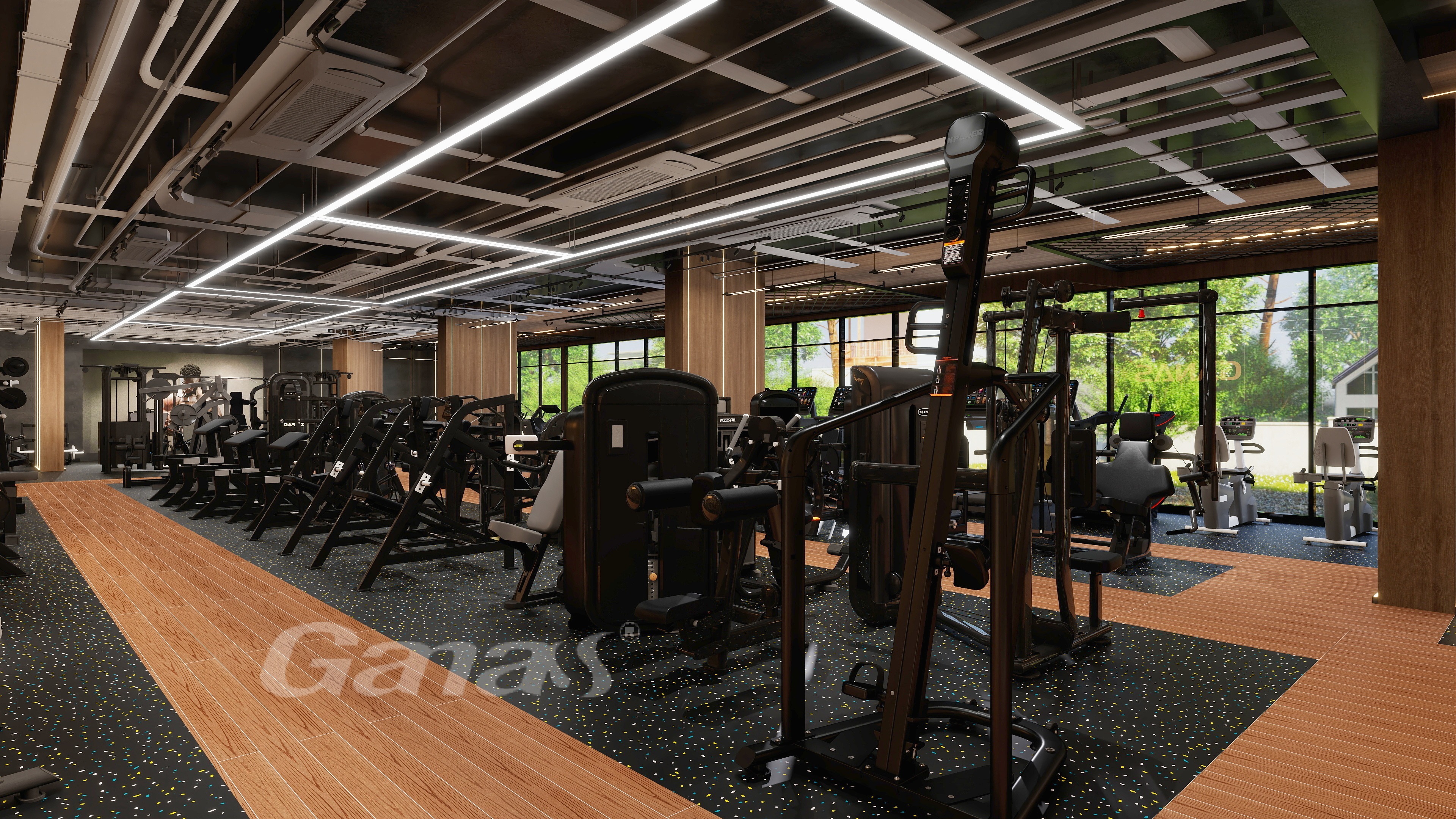
Interior design not only influences visual aesthetics but also directly impacts the member experience and their length of stay.Basic renovation encompasses elements such as rubber flooring, mirrored walls, and lighting systems; mid-to-high-end gyms, however, incorporate additional features such as brand visual design, functional zoning, and a personalized aesthetic. The locker rooms and shower areas, in particular—due to their construction complexity and high costs—often account for a significant portion of the overall renovation budget.An excellent gym design must be seamlessly integrated with the layout of its equipment. For instance, the cardio zone requires open space, the strength training area demands logical partitioning, and the functional training zone necessitates ample room for movement.Ganas possesses a distinct advantage in this regard; their team can provide clients with 2D and 3D design renderings that seamlessly integrate the equipment with the available space. This design approach—grounded in the actual dimensions of the fitness equipment—constitutes a vital component of a comprehensive fitness club project solution, effectively preventing any waste of space.
4.Investment in Fitness Equipment: Determining Competitiveness and Return on Investment
Equipment constitutes one of a gym's most critical assets, typically accounting for 30% to 50% of the total investment. The selection of equipment not only impacts the user experience but also directly affects future maintenance costs and brand image.
For small studios, equipment budgets can be kept within the range of $15,000 to $80,000. At this stage, the focus should be on selecting the best equipment for a fitness studio—such as multi-functional training racks and compact cardio machines—to ensure efficient space utilization.Medium-to-large-scale gyms, on the other hand, require a more comprehensive equipment configuration—including treadmills, elliptical trainers, strength machines, and a free weights area. At this stage, it is recommended to opt for a "complete gym equipment package," or a comprehensive, turnkey equipment solution.
Ganas possesses distinct advantages in this field:
With over 20 years of manufacturing experience, our technology is mature and stable.
We offer an extensive product line covering the full spectrum of training modalities—including cardio, strength, and functional training.
We support OEM/ODM customization, enabling personalized designs tailored to our clients' specific brands.
Utilizing high-strength steel and precision manufacturing processes, our equipment is built to withstand high-frequency commercial use.
We provide comprehensive, one-stop services ranging from manufacturing to shipping and installation.
Through this "complete gym equipment package" model, not only can procurement costs be reduced, but it also ensures stylistic consistency among the equipment, thereby enhancing the overall brand image.
5.Personnel and Operational Costs: The Key to Long-Term Profitability
A gym is not only a capital-intensive venture but also an ongoing, service-oriented business.Personnel costs encompass coaches, sales staff, front desk personnel, and cleaning staff, typically ranging from $3,000 to over $10,000 per month. Additionally, these costs include utilities, equipment maintenance fees, and expenses for the membership management system.
6.Marketing and Payback Period: The Critical Step Determining Project Success or Failure
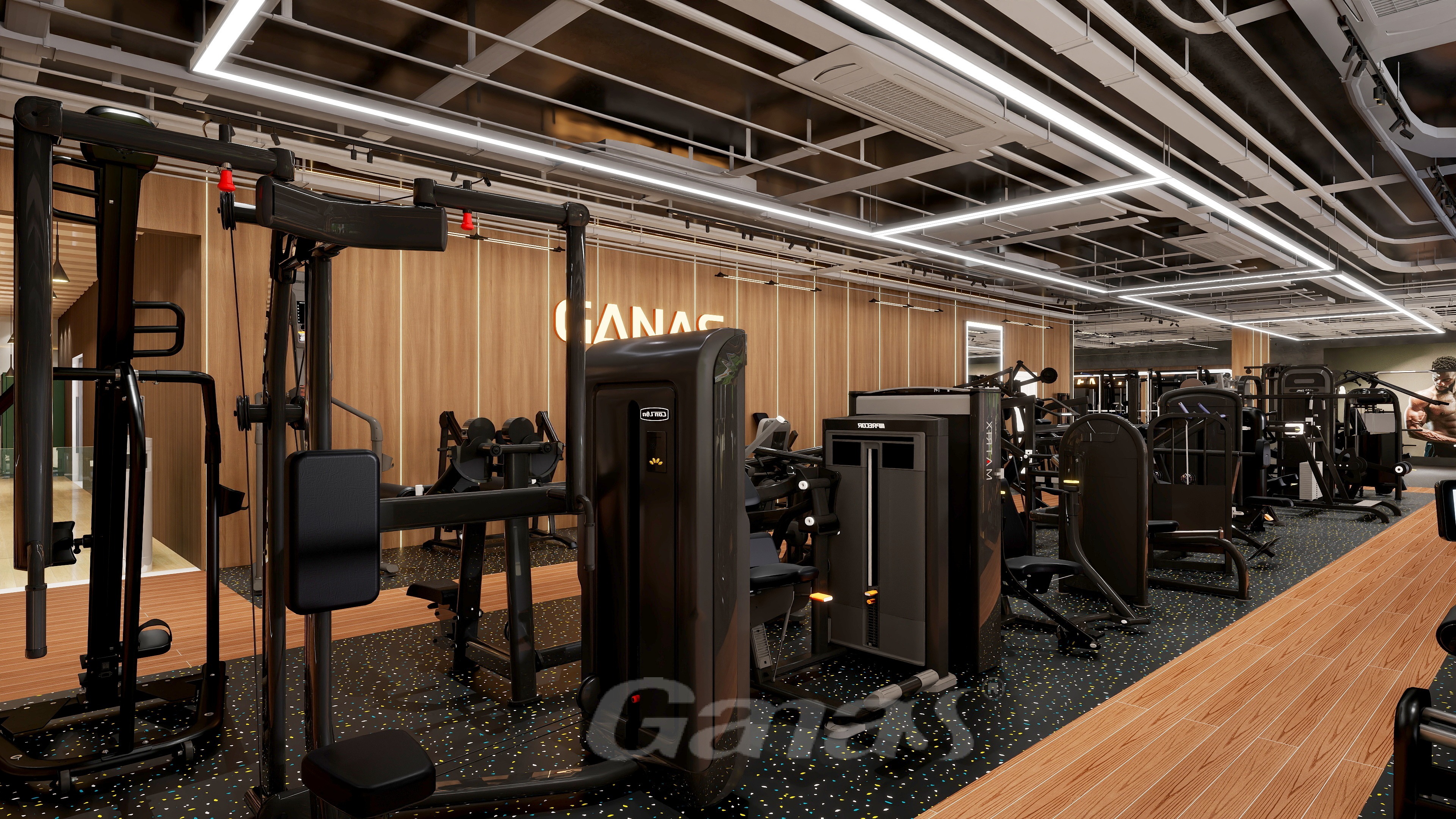
Whether or not a gym is successful depends largely on its marketing strategies before and after opening.Typically, the marketing budget ranges from $20,000 to $50,000, covering online advertising, social media promotion, and offline events. A gym featuring strong design aesthetics and high-end equipment is more likely to go viral on social media.Ganas’s equipment design prioritizes the fusion of aesthetics and functionality; many of its products possess strong visual impact, making them ideally suited for creating short-form videos and marketing content—a factor that plays a crucial role in boosting brand exposure.
7.Why are more and more investors choosing comprehensive solutions?
Compared to traditional, decentralized procurement models, one-stop solutions—specifically, comprehensive fitness club project solutions—are becoming the mainstream choice.
This model typically encompasses:
Project Planning
Equipment Configuration
Space Design
Installation and Commissioning
After-sales Support
When combined with a complete gym equipment package, it enables the seamless realization of the entire project—from inception to full implementation.
Ganas has successfully served over 100,000 fitness projects worldwide, spanning a diverse range of facility types—including commercial gyms, hotel fitness centers, and private training studios. This extensive project experience enables the company to deliver precisely tailored solutions to a wide variety of clients, constituting a key competitive advantage that establishes Ganas as a leading manufacturer of fitness equipment.
8.Summary: How to Build a Successful Gym with More Reasonable Investment?
Opening a gym is not merely a simple matter of "renting a venue plus purchasing equipment," but rather a complex systems engineering project. The keys to success lie in:
Clearly defining the project's positioning and target audience;
Effectively controlling costs related to the venue and interior renovation.
Select reliable, top-tier fitness equipment manufacturers.
Precisely configure the best equipment tailored for your fitness studio.
Prioritize the adoption of a complete gym equipment package.
Leverage professional fitness club project solutions for comprehensive overall planning.
Only by establishing a systematic layout during the initial stages can you ensure stable profitability and long-term growth in subsequent operations.

 +86 13642520076
 G10 Workshop, Longteng Industrial Zone, Shiling Village Committee, Longtang Town, Qingcheng District, Guangzhou, Guangdong, China
 ky004@ky868.com
 +86 13642520076