Professional manufacturer of full set heavy-duty commercial gym equipment over 23 years.  +86 13642520076
 ky004@ky868.com
Language
Professional manufacturer of full set heavy-duty commercial gym equipment over 23 years. +86 13642520076 ky004@ky868.com
China has become an important sourcing destination for commercial gym equipment, offering a wide range of strength machines, cardio equipment, free weights, functional training systems, and complete gym solutions. For gym owners, fitness distributors, hotel developers, and commercial project contractors, working with a Chinese manufacturer can provide competitive pricing, flexible customization, and access to a broad product range.
However, choosing the right supplier requires more than comparing quotations. Product quality, manufacturing capabilities, delivery schedules, certifications, and after-sales support can all affect the success of your investment.
Before placing an order, here are the key factors to check when buying gym equipment from China.
1. Verify the Supplier's Business Background
The first step is to confirm that you are dealing with a reliable gym equipment supplier.
China has many fitness equipment companies, including manufacturers, trading companies, wholesalers, and distributors. Each business model has its advantages, but understanding who you are buying from helps you evaluate pricing, production control, and customization capabilities.
Check the following information:
Company registration: Confirm the company's legal name, business registration, and operating history.
Business model: Determine whether the supplier operates its own factory or outsources production.
Manufacturing experience: Review its experience in producing commercial fitness equipment.
Product range: Check whether it offers the equipment categories required for your project.
Export experience: Ask about its experience serving international customers and handling export documentation.
A supplier with a clear business background and established export experience is generally easier to evaluate and communicate with throughout the purchasing process.
For larger orders, consider arranging a video factory tour or visiting the manufacturing facility in person. Seeing the production environment can help you verify the supplier's actual capabilities.
2. Evaluate Factory Strength and Manufacturing Capabilities
If you are purchasing equipment for a commercial gym, hotel, fitness club, or distribution business, manufacturing capacity matters.
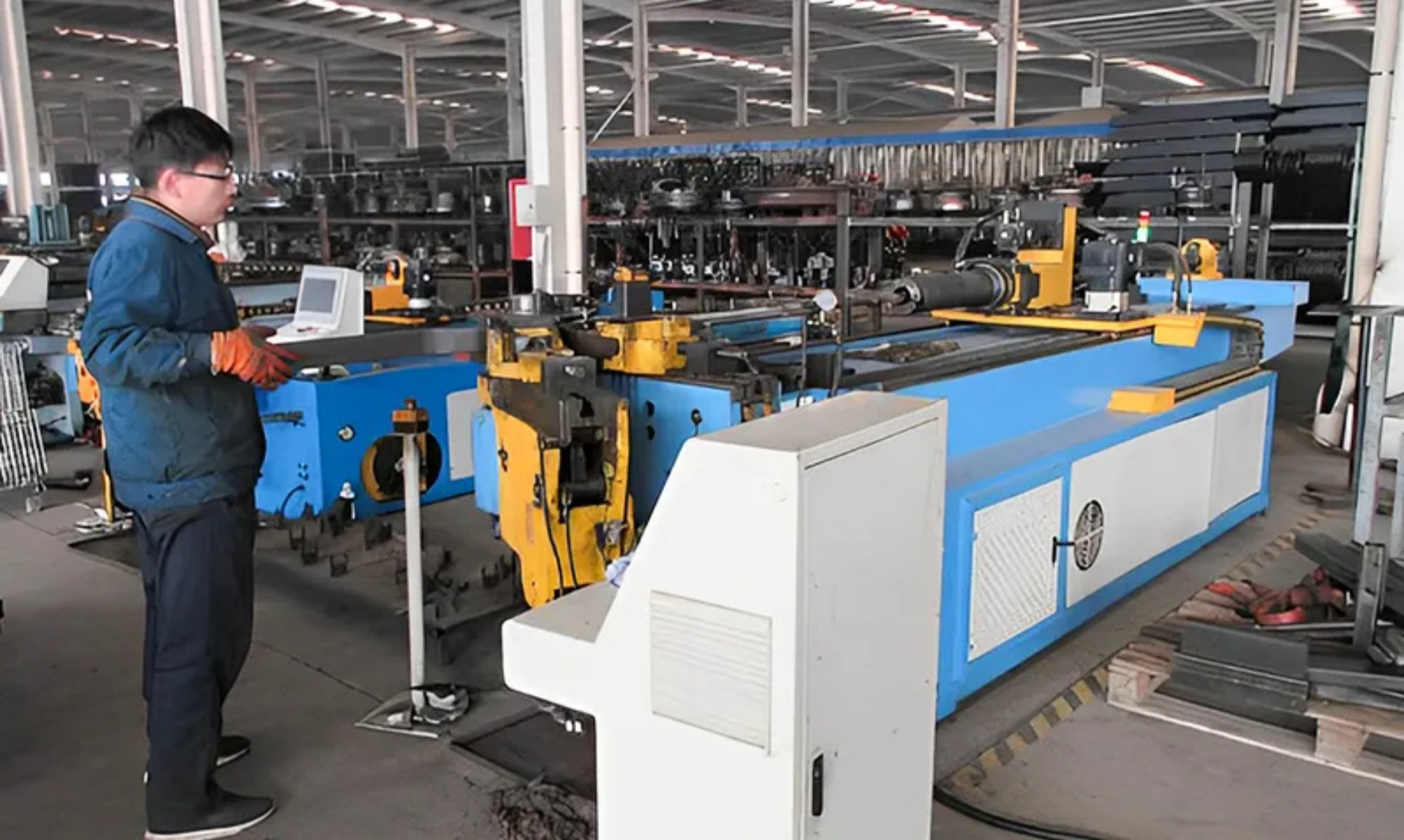
A professional gym equipment manufacturer should have the facilities, machinery, technical personnel, and quality control procedures necessary to produce consistent products.
Look for manufacturing capabilities such as:
Laser cutting and CNC machining
Automatic pipe bending
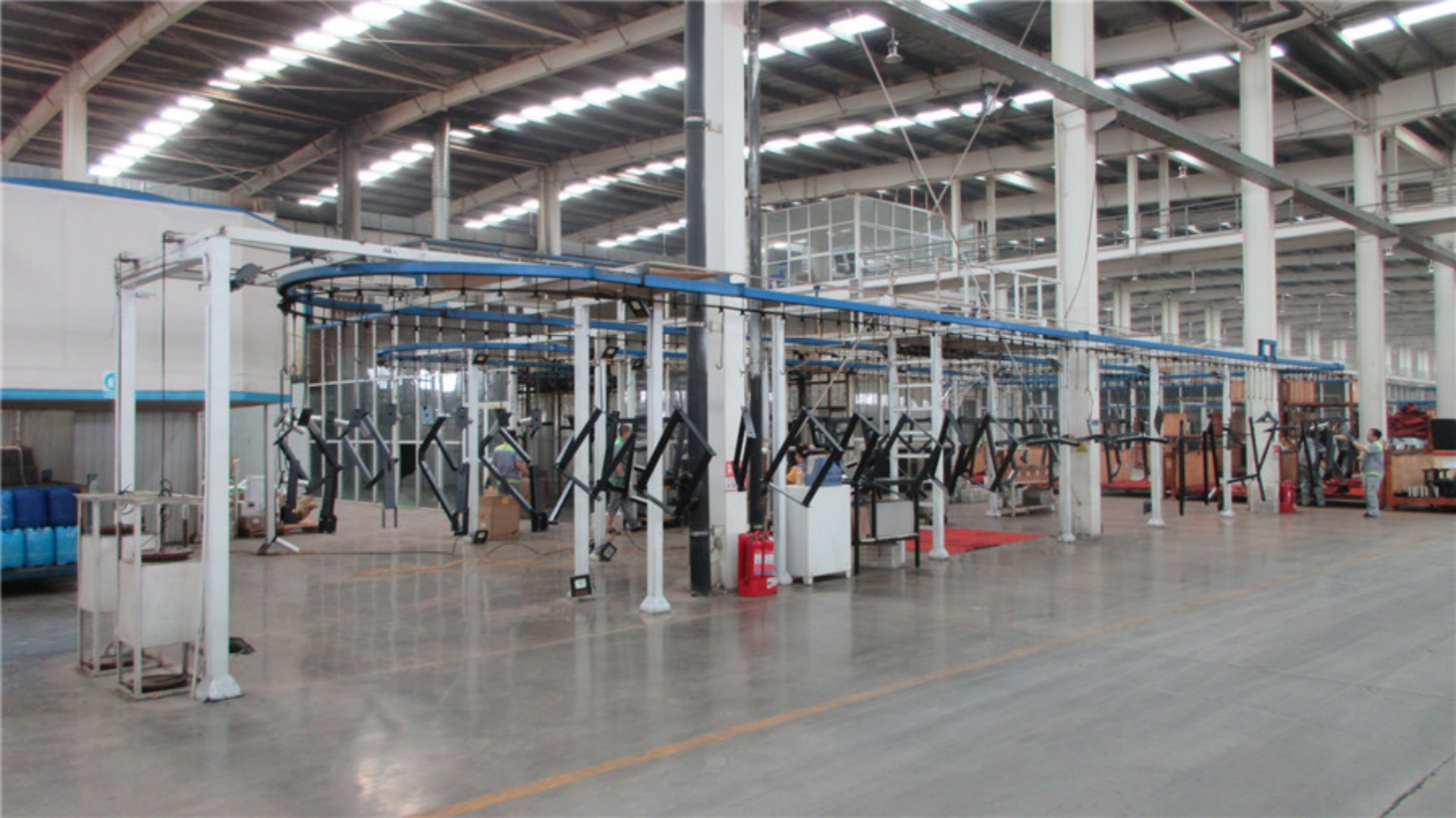
Robotic or controlled welding processes
Grinding and surface finishing
Powder coating and painting
Equipment assembly and functional testing
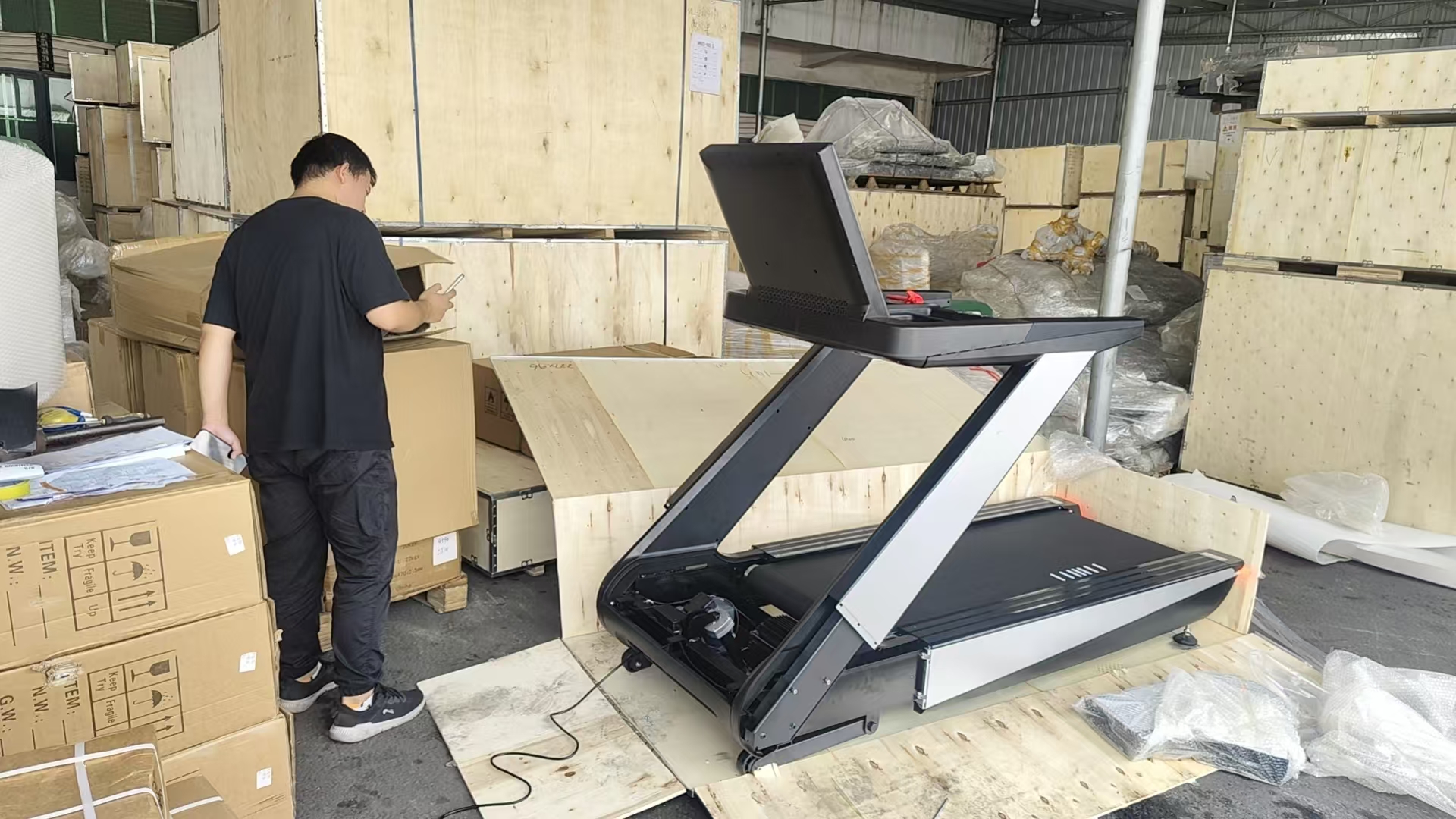
Finished-product inspection and export packing
These capabilities can influence product consistency, production efficiency, and overall quality.
You should also ask about the factory's production capacity, current workload, and estimated lead time. A supplier may offer an attractive price but struggle to meet your delivery schedule if its production resources are limited.
For example, Guangdong Panata Fitness Equipment Co., Ltd., the company behind the Ganas brand, has operated in the commercial fitness equipment industry since 2004. Its manufacturing operations in Qingyuan, Guangdong, China, support the development and production of equipment for different commercial fitness projects. When comparing suppliers, focus on verifiable manufacturing capabilities rather than relying solely on company profiles or promotional claims.
3. Check Material Quality and Product Construction
Gym equipment used in commercial environments must withstand repeated use, significant loads, and frequent adjustments. Material selection and construction quality therefore deserve close attention.
Before ordering, request detailed specifications for the equipment you intend to purchase.
Important factors include:
Frame materials: Ask about the type and thickness of steel used in the main frame. Tube dimensions and wall thickness should be appropriate for the equipment's intended use and rated load.
Welding quality: Examine weld consistency, joint strength, and finishing. Poor welding can affect both structural integrity and appearance.
Surface treatment: Check the pretreatment process, powder coating quality, corrosion resistance, and resistance to scratches during normal use.
Upholstery and padding: Ask about upholstery materials, foam density, stitching quality, and resistance to wear and sweat.
Moving components: Inspect bearings, pulleys, cables, guide rods, adjustment mechanisms, and other parts that experience repeated movement.
Hardware and accessories: Confirm the quality of bolts, handles, grips, weight-stack components, and adjustment pins.
Do not evaluate a machine based on appearance alone. A well-designed commercial machine should combine a stable structure, smooth movement, appropriate biomechanics, and comfortable user contact points.
If durability is a priority, request product specifications and test samples where practical. These details help you compare products on a like-for-like basis rather than choosing the lowest quotation.
4. Confirm That the Equipment Is Suitable for Commercial Use
Not all fitness equipment is designed for the same operating environment. Home-use products and commercial gym equipment can differ significantly in construction, maintenance requirements, and expected usage intensity.
Before ordering, explain how the equipment will be used.
For a commercial gym, consider:
Expected daily usage and user volume
Maximum user weight and equipment load ratings
Frame stability and structural design
Motor specifications for treadmills and other powered equipment
Cable and pulley durability on strength machines
Ease of adjustment for users of different heights
Availability of replacement parts
For example, a hotel gym may prioritize compact dimensions, user-friendly controls, and a balanced selection of cardio and strength equipment. A high-traffic fitness club may need heavier-duty machines designed for frequent use throughout the day. Ask the manufacturer to recommend products based on your actual operating requirements. This can help prevent underspecification and unnecessary spending on features your customers may not need.
5. Review Product Certifications and Import Requirements
Product compliance is another essential consideration when ordering gym equipment from China.
Certification requirements vary according to the destination country, equipment category, and applicable regulations. A document that is sufficient for one market may not meet the requirements of another.
Before placing an order, identify the regulations that apply to your products and destination.
Depending on the equipment and market, you may need to check:
Applicable product safety standards
Electrical safety requirements for motorized equipment
Electromagnetic compatibility requirements
Required conformity assessments and declarations
Test reports and supporting technical documentation
Labeling, manuals, and language requirements
Customs classification and import documentation
For example, certain products sold in the European market may fall under applicable EU product legislation and require CE marking. The specific obligations depend on the product and legislation involved. CE marking is not a universal quality certificate, and it should not be assumed that every gym product requires the same documentation. For the United States and other destinations, verify the relevant federal, state, or local requirements and any applicable standards or certification schemes. Ask the supplier to identify which documents are available for the exact models you intend to purchase. Where necessary, confirm their validity and scope with the relevant authorities or an independent compliance specialist. Do this before paying a deposit, not when the shipment is already on its way.
6. Compare Quotations and Understand the Total Cost
Price is an important factor when sourcing gym equipment from China, but the lowest quotation does not always represent the best value.
When comparing suppliers, make sure the quotations cover the same products, specifications, quantities, and delivery conditions.
Check whether the quoted price includes:
Equipment and standard accessories
Custom logos, colors, or upholstery
Protective packaging and export packing
Spare parts, if included
Installation guidance or technical support
Transportation to the port or destination
Export documentation and other applicable charges
You should also clarify the Incoterms used in the quotation.
For example, EXW, FOB, CIF, and DAP allocate costs, delivery responsibilities, and risks differently. Under FOB, the seller generally handles delivery and export clearance up to loading the goods on board the nominated vessel at the agreed port. Under CIF, the seller also arranges and pays for freight and insurance to the named destination port, although risk transfers earlier, when the goods are loaded on board.
To estimate the actual investment, consider the full landed cost:
Total landed cost = Equipment cost + Packaging + Freight + Insurance + Customs duties and taxes + Destination charges + Inland delivery
Depending on your arrangement, some of these expenses may already be included in the quotation. Avoid counting them twice.
For commercial projects, compare the equipment's expected service life, maintenance needs, and replacement costs as well as its purchase price. Reliable equipment may offer better long-term value even when its initial price is higher.
7. Confirm Customization Options and Project Planning Services
Customization can be especially valuable for gym owners, hotel operators, fitness chains, and distributors who want to establish a consistent brand identity.
Before ordering, ask whether the manufacturer can customize:
Equipment frame colors
Upholstery colors
Brand logos and labels
Selected product configurations
Packaging and product identification
Equipment combinations for different gym layouts
However, customization should be clearly documented. Confirm color references, logo placement, approved artwork, and any additional costs before production begins.
If you are opening a new gym, consider working with a supplier that offers space planning and equipment selection.
A professional supplier should be able to review your floor plan, understand your target customers, recommend suitable equipment, and help organize training zones.
For example, a 300 m² commercial gym may require a different balance of cardio, selectorized strength machines, free weights, and functional training equipment from a 300 m² hotel fitness room.
Good planning helps improve space utilization, equipment accessibility, and the overall member experience. It can also reduce the risk of ordering machines that do not fit the available space.
8. Establish Clear Payment Terms and a Written Contract
International transactions require clear communication and documented agreements.
Before transferring money, make sure the quotation, proforma invoice, purchase order, and sales contract accurately describe the transaction.
Important details include:
Full legal names of the buyer and seller
Product names, model numbers, quantities, and specifications
Unit prices and total order value
Payment method and payment schedule
Production lead time and estimated shipping date
Packaging requirements
Inspection and acceptance procedures
Warranty terms and after-sales responsibilities
Procedures for handling defects, shortages, or delays
If the agreement includes a deposit and a balance payment, clarify when each payment becomes due and what documentation or inspection evidence is required before the balance is paid.
Avoid relying exclusively on informal messages or verbal promises. Keep approved drawings, product specifications, and customization details as part of the order documentation.
For large orders, first-time purchases, or transactions involving complex payment conditions, consider independent legal or trade-finance advice where appropriate.
9. Arrange Quality Inspection Before Shipment
Pre-shipment inspection is one of the most practical ways to reduce purchasing risks.
Even when a supplier has a good reputation, checking the finished products before shipment helps confirm that the order matches the agreed specifications.
A useful inspection plan should cover several areas.
Quantity and model verification: Confirm that the models, quantities, and accessories match the purchase order.
Appearance: Check paint finish, upholstery, labels, weld finishing, and visible damage.
Structural quality: Examine frame alignment, fasteners, joints, and overall stability.
Functional testing: Operate the adjustment mechanisms, pulleys, weight stacks, moving parts, and electrical systems where applicable.
Specification verification: Confirm dimensions, key materials, rated loads, and other agreed technical requirements.
Packaging: Check protective materials, carton or crate strength, moisture protection where needed, and shipping marks.
For larger shipments, you can arrange an independent inspection company to carry out checks against an agreed inspection checklist.
Ask the supplier to provide inspection photos, videos, and test records. For complex equipment or large projects, define acceptance criteria before manufacturing starts.
A clear inspection procedure helps both parties understand what constitutes an acceptable shipment and how any identified problems should be resolved.
10. Understand Shipping, Customs Clearance, and Delivery
Gym equipment can be bulky and heavy, making logistics planning particularly important.
Before ordering, discuss the expected packing dimensions, gross weight, total shipment volume, loading method, and estimated production lead time with the supplier.
Confirm the following details:
Port of loading and destination port
Shipping method and estimated transit time
Incoterms and the named delivery location
Export documents required
Customs broker or freight forwarder responsibilities
Import duties, taxes, and destination charges
Final delivery arrangements
Unloading equipment and site access requirements
Ask the supplier to provide a packing list with accurate quantities, dimensions, weights, and package numbers. These details help your freight forwarder calculate shipping costs and prepare customs documentation.
Also consider whether your destination facility has sufficient access for delivery trucks and whether large machines will fit through entrances, corridors, elevators, and stairways.
If the order is for a new gym project, coordinate delivery with the site preparation and installation schedule. Equipment arriving too early can create storage costs, while late delivery may delay your opening.
Allow reasonable time for production, shipping, customs clearance, and unexpected logistics issues rather than planning around an overly optimistic delivery date.
11. Check Warranty, Spare Parts, and After-Sales Support
Gym equipment is a long-term investment, especially for businesses that depend on uninterrupted daily operation. After-sales service should therefore be evaluated before the order is confirmed.
Ask the supplier to explain its warranty policy in writing.
Key questions include:
How long is the warranty for frames, motors, electronic components, and other parts?
Which components are covered, and what exclusions apply?
Who pays for replacement parts and international shipping?
How are technical issues diagnosed and resolved?
Are spare parts available for future maintenance?
Can the supplier provide installation instructions and remote technical assistance?
Warranty coverage varies by manufacturer and component, so do not assume that every part has the same warranty period.
For international buyers, the availability of replacement parts is particularly important. A relatively inexpensive component can cause significant downtime if it takes weeks to obtain a replacement.
Choose a supplier that communicates clearly, provides practical troubleshooting support, and has a defined process for handling warranty claims.
You should also ask about preventive maintenance recommendations. Regular inspections, lubrication where specified, cable checks, and cleaning can help maintain equipment performance and reduce avoidable breakdowns.
12. Evaluate Communication and Long-Term Partnership Potential
Ordering gym equipment from China involves multiple stages, from initial consultation and product selection to production, shipping, installation, and after-sales service.
A reliable supplier should communicate consistently throughout this process.
Pay attention to how the supplier responds to technical questions, explains product differences, provides quotations, and handles requests for clarification.
Warning signs may include vague specifications, inconsistent pricing, unrealistic delivery promises, reluctance to provide factory information, or unclear warranty conditions.
For distributors and businesses planning multiple gym projects, long-term cooperation can be more valuable than a one-time low price. Consistent product quality, stable supply, customization support, and dependable communication can help you serve your own customers more effectively.
Start by evaluating the supplier's ability to meet your current requirements, then consider whether it can support your future business growth.
Final Checklist Before Ordering Gym Equipment from China
Before confirming your order, use this checklist to review the most important purchasing decisions.
Verify the supplier's legal identity and manufacturing background.
Review factory capabilities and production capacity.
Confirm materials, dimensions, specifications, and rated loads.
Ensure the equipment suits your intended commercial application.
Check applicable certifications and destination-market regulations.
Compare quotations and calculate the total landed cost.
Confirm customization details and equipment layout requirements.
Document payment terms, delivery schedules, and acceptance criteria.
Arrange pre-shipment inspection and functional testing.
Confirm shipping documents, customs responsibilities, and delivery arrangements.
Review warranty coverage, spare parts availability, and technical support.
Looking for a Reliable Gym Equipment Manufacturer in China?
Choosing the right manufacturing partner can make a significant difference to your gym project's budget, equipment quality, and long-term operating costs.
Ganas, a commercial fitness equipment brand of Guangdong Panata Fitness Equipment Co., Ltd., has been serving the fitness industry since 2004. Based in Qingyuan, Guangdong, China, the company provides commercial strength equipment, cardio machines, free weights, functional training systems, and complete gym equipment solutions.
With in-house manufacturing capabilities and project support, Ganas works with gym owners, distributors, hotels, and fitness project contractors to help them select equipment that suits their space, budget, and business objectives.
Whether you are opening a new fitness club, upgrading a hotel gym, or sourcing equipment for distribution, the right supplier should offer more than competitive pricing. Product quality, transparent specifications, dependable delivery, and responsive after-sales support all matter.
Visit www.ganas.com.cn to explore commercial gym equipment and discuss your project requirements with the Ganas team.
Ready to start your gym project? Share your floor plan, estimated budget, and equipment requirements to receive a tailored equipment recommendation and quotation.

 +86 13642520076
 G10 Workshop, Longteng Industrial Zone, Shiling Village Committee, Longtang Town, Qingcheng District, Guangzhou, Guangdong, China
 ky004@ky868.com
 +86 13642520076